The 2026 Ecommerce Stack Clean-Up: What to keep, what to kill, and what to connect

It’s early 2026, but I’m already hearing the same complaint from eCommerce directors: “We have tools for everything… and somehow nothing feels clear.”
I’m Maria, Head of Marketing at Fourmeta, and I’ve watched teams add more software every quarter, then wonder why decision-making gets slower instead of faster.
This post is my “no-BS” guide to simplifying your ecommerce tech stack without losing performance.
Here’s the uncomfortable stat that explains a lot: the 2025 Gartner Marketing Technology Survey reports martech utilization has dropped to 49%.
That means about half of what companies pay for isn’t used properly, which is exactly how “tool-stack fatigue” happens.
And in 2026, that problem gets worse because AI adds more tools, not fewer.
Why this is suddenly a board-level problem in 2026

Most directors don’t want “more tools.”
They want fewer dashboards, fewer arguments about attribution, and faster iteration cycles.
A 2026 analytics trend piece literally calls out platform consolidation as a theme: fewer, more complete tools because stacks are becoming unmanageable.
And Reddit is basically the support group for this.
In one thread asking “what tools actually help,” the most useful comments weren’t hype tools — they were about linking tools and treating GA4 as directional.
That’s the vibe: clarity, not complexity.
The 2026 rule: your stack should do 3 jobs only
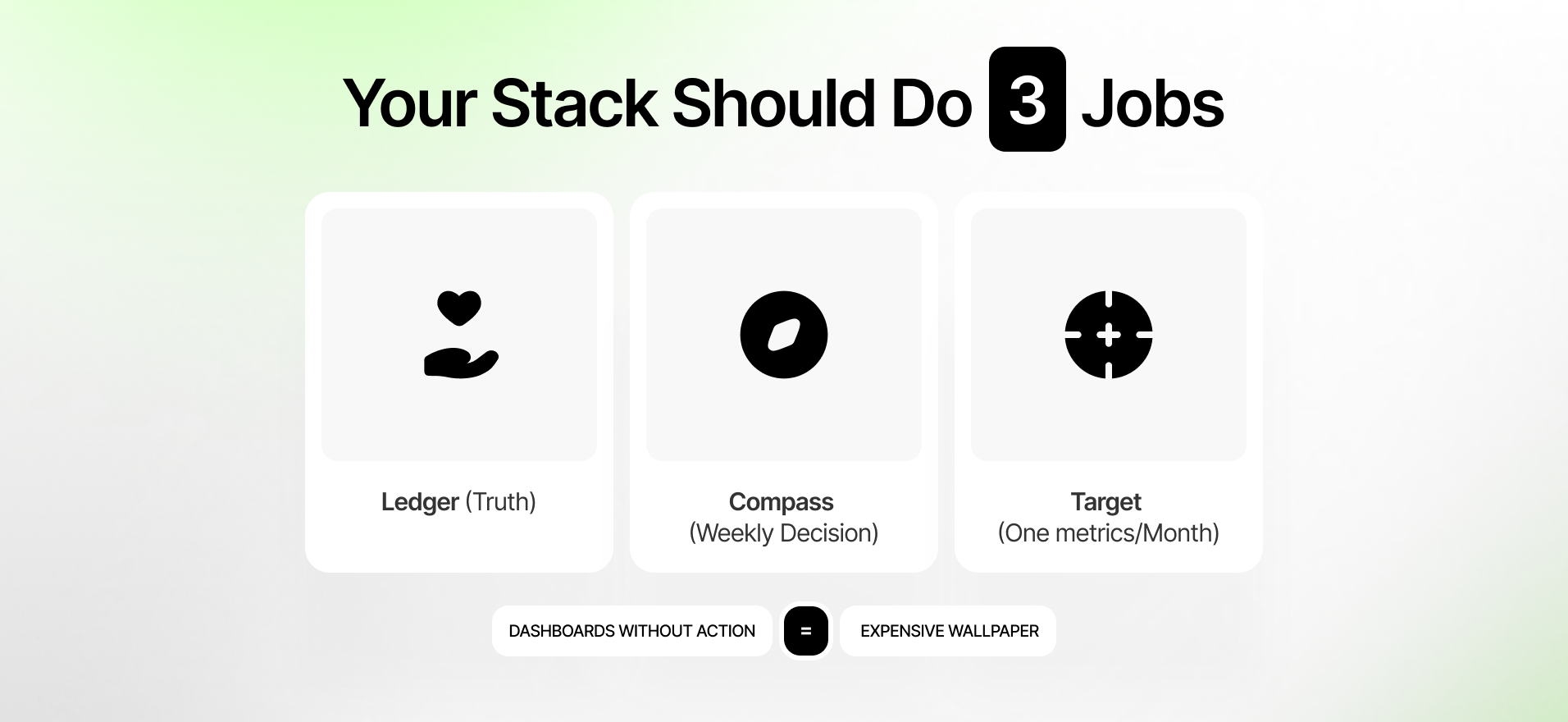
Job #1: Track revenue truth.
That means your “what happened” numbers come from your store + payments, not five competing dashboards.
Everything else is interpretation.
Job #2: Help you make decisions weekly.
If your team can’t answer “what changed and why” in 15 minutes on Monday, your stack is failing.
Dashboards that don’t lead to actions are just expensive wallpapers.
Job #3: Improve one funnel metric per month.
Conversion rate, AOV, repeat rate, refund rate, CAC, or MER — pick one.
If a tool doesn’t move at least one of these, it’s a “nice-to-have,” not a “keep.”
What eCommerce directors are searching in 2026 (and what they actually mean)
When people search “best ecommerce tools 2026,” they usually mean “what’s worth paying for without adding chaos.”
When they search “attribution stack for Shopify,” they usually mean “how do I stop Shopify vs GA4 vs ad platforms from arguing.”
When they search “how to simplify martech stack,” they usually mean “what can I delete without breaking revenue.”
So instead of listing 50 tools, I’ll give you a tech stack audit and clean framework: Keep / Kill / Connect.
It works for mid-market DTC and doesn’t collapse when you scale.
And you can run it in a single afternoon.
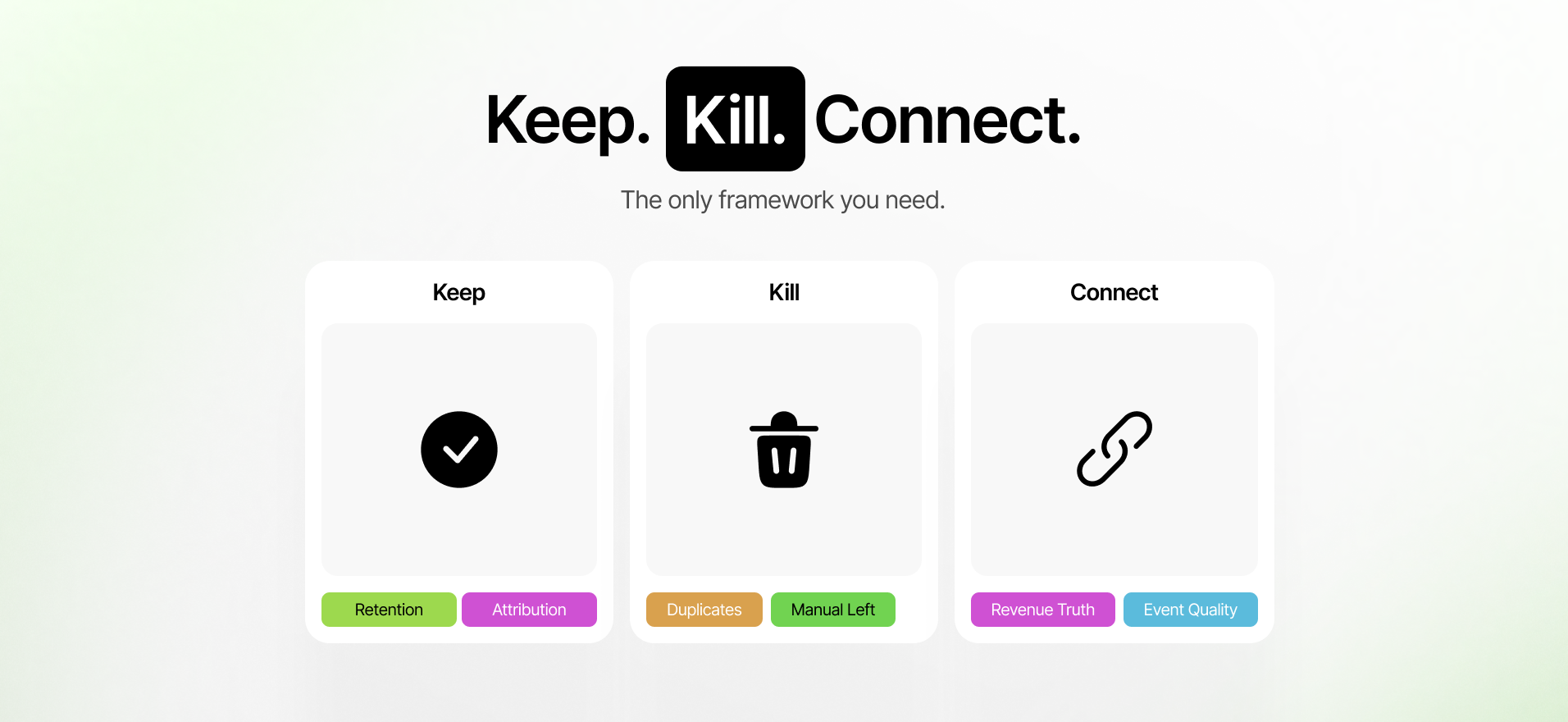
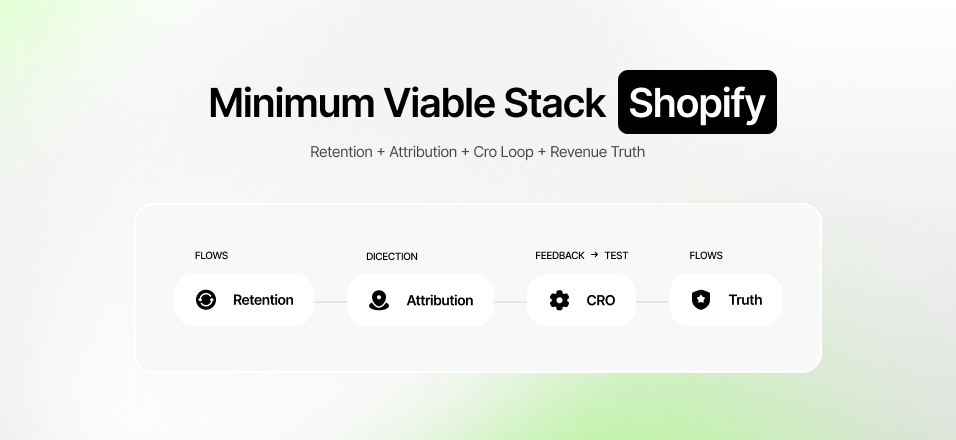
KEEP: the 2026 “minimum viable stack” for a Shopify brand
1) One retention engine you actually use
If you’re on Klaviyo (or an equivalent), the win isn’t “having it.”
The win is building a system of flows that runs without heroics.
In that Reddit thread, multiple teams called out lifecycle flows as the tool that truly “moved the needle,” not the fancy add-ons.
Keep if: you have 6–10 core flows live (welcome, browse abandon, cart abandon, post-purchase, winback, replenishment, VIP).
Kill if: it’s mostly newsletters and “we’ll set flows later.”
2) One attribution layer you trust for direction
Teams keep mentioning Triple Whale because it reduces day-to-day confusion, even if it’s not perfect.
The key insight from Reddit wasn’t “this tool is magic.”
It was “stop chasing perfect GA4 and use it directionally,” then validate decisions against store revenue.
Keep if: your team uses it weekly to reallocate spend and spot trends.
Kill if: it’s “another dashboard” and nobody changes decisions because of it.
3) One CRO feedback loop that creates action, not reports
The best CRO tools aren’t the ones with the fanciest heatmaps.
They’re the ones that force decisions: user recordings + 1–2 on-site questions + a testing cadence.
In that same thread, one team said a simple exit survey (“what almost stopped you?”) drove a few UX fixes and claimed a conversion lift — which is exactly the point: insight → action.
Keep if: you ship changes weekly based on feedback.
Kill if: you collect insights and never deploy them.
KILL: tools that quietly destroy speed
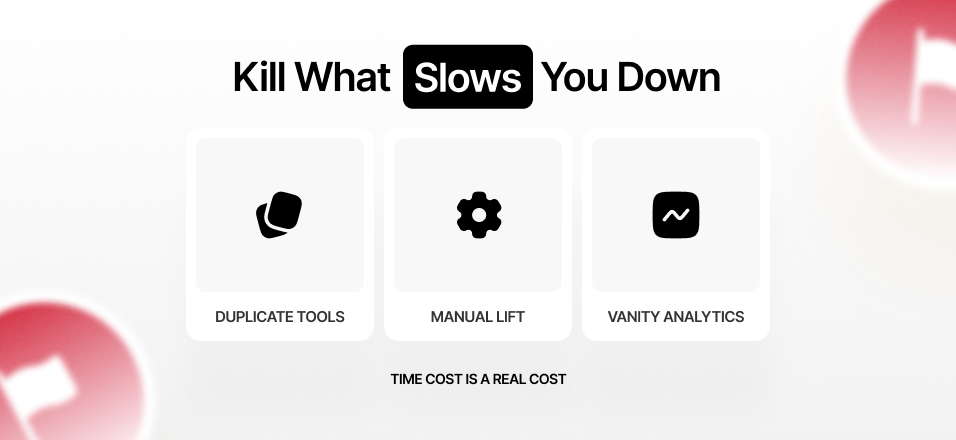
1) Anything that duplicates the same job
If you have two pop-up tools, two review widgets, and three landing page builders, you’re paying for internal confusion.
A tool only deserves a seat if it does something your current stack can’t do.
“Better UI” isn’t enough.
2) “Manual lift” tools that require constant babysitting
In the Reddit thread, one person said they cut an A/B tool because it required ongoing manual work and the uplift didn’t justify the time.
That’s a director-level filter: time cost is a real cost.
If a tool needs a specialist to run forever, it’s not a tool — it’s a headcount.
3) Vanity analytics that aren’t tied to a decision
If the output is “interesting,” not “actionable,” it doesn’t belong.
Your stack should answer questions like: “Which channel drove profitable customers?” not “Which ad got the most clicks?”
Clicks don’t pay payroll.
CONNECT: the part that makes a small stack feel “enterprise”
Here’s what most teams miss: you don’t need 30 tools — you need 5 tools that talk to each other.
That’s why “stack clean-up” is a systems project, not a shopping project.
The most practical Reddit advice was literally about linking tools and workflows, not adding more tools.
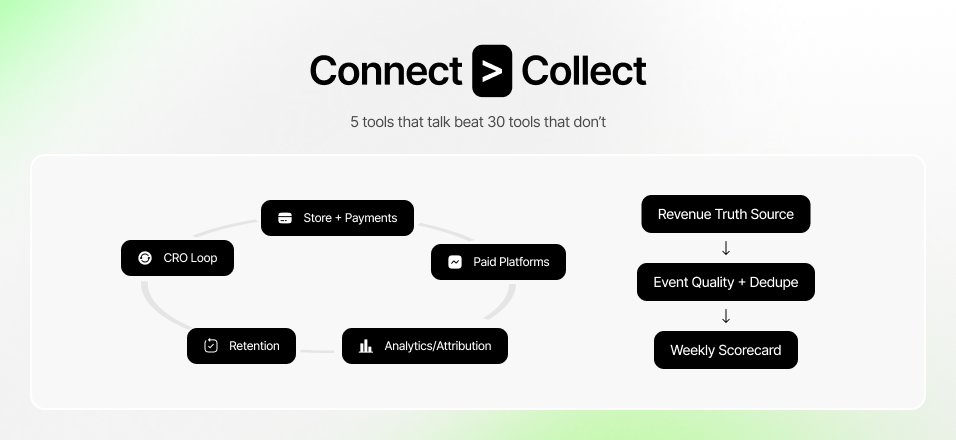
Connection #1: Decide your “revenue truth” source
For most Shopify brands, the revenue truth is: orders + refunds + net sales from the store/payment processor.
Then you use analytics tools to explain movement, not redefine revenue.
That mindset alone reduces 50% of reporting drama.
Connection #2: Fix event quality before you add more tracking
In 2026, lots of teams are moving toward server-side setups because browser tracking is increasingly unreliable.
You’ll see Shopify apps explicitly selling “server-side tagging” as the fix for data loss and missing conversions.
Even if you don’t go fully server-side yet, the rule stays the same: dedupe events, standardize naming, and keep the funnel clean.
Connection #3: Build one weekly scorecard that your whole team uses
One page, weekly cadence, same definitions every time.
This is where tool overload dies, because the team stops arguing about whose dashboard is “right.”
If a metric isn’t on the scorecard, it’s not a priority this week.
The “Keep / Kill / Connect” audit you can run in 45 minutes
Step 1: List every tool and assign it one job.
If a tool has two jobs, it usually does neither well.
If three tools have the same job, you already know what to cut.
Step 2: Score each tool on 3 questions.
Does it save time, increase profit, or reduce risk?
If it doesn’t do at least one, it’s a candidate for removal.
Step 3: Define your stack “spine.”
Your spine is: store revenue truth + attribution direction + retention engine + CRO feedback loop.
Everything else is optional until proven.
Best ecommerce tools in 2026 isn’t a list — it’s a strategy
The “best ecommerce tools 2026” question is really a question about outcomes.
The winning stacks are smaller, cleaner, and ruthlessly connected.
And the best teams aren’t obsessed with dashboards — they’re obsessed with iteration speed.
If you want help, here’s the simple Fourmeta offer
At Shopify scale, stack mistakes get expensive quickly.
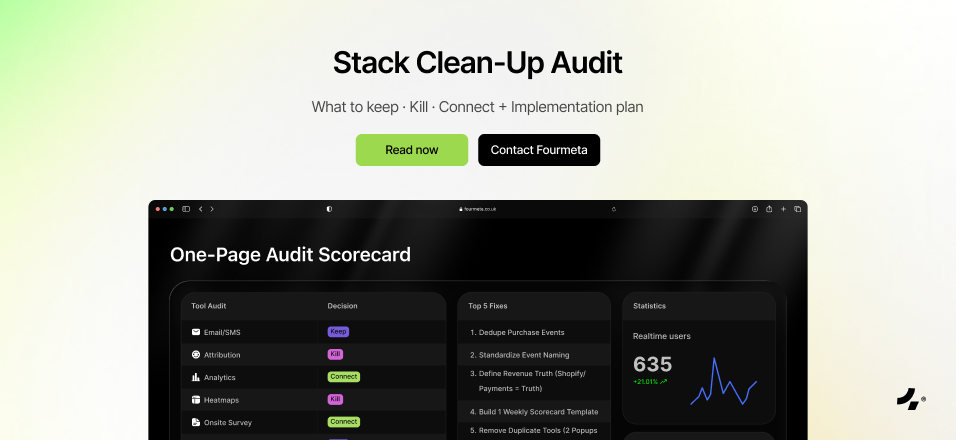
We run a Stack Clean-Up Audit: what to keep, what to kill, what to connect — plus an implementation plan your dev/marketing teams can actually execute.
If you want a fast start, we can also deliver a fixed-scope Attribution + Tracking Validation and return a one-page “truth map” for reporting.
Contact us with your current tool list (even a screenshot), and we’ll tell you what we’d cut first and why.