
Shopify Winter ’26 Edition Review: Ushering in a New Renaissance in E-Commerce

If you work in eCommerce long enough, you start to treat every “big update” with a bit of healthy skepticism. When Shopify announced the Winter ’26 Renaissance Edition, I honestly expected a few nice-to-have tweaks and some AI buzzwords – useful, but nothing life-changing. After going through all the updates as a Shopify partner and eCommerce strategist, I have to admit: this one really does feel different.
Instead of just adding more features, Shopify is quietly changing how we build and run online stores. AI isn’t sitting in a separate tab anymore; it’s woven into everyday tasks, from editing your theme by typing a sentence to testing risky ideas without risking your revenue. In this review, I’ll walk you through what actually impressed me, what real problems these updates solve for merchants, and where agencies like Fourmeta fit into helping you use all of this in a smart, practical way.
This isn’t a technical changelog – it’s my take as someone who has spent the last 10 years inside Shopify backends, launch weeks, and “why did conversion drop?” conversations. I’ll highlight the big wins (hello, Sidekick glow-up, Product Network, and SimGym), call out the things that will change your day-to-day life the most, and keep the hype level honest. Let’s unpack what this Winter ’26 “Renaissance” really means for your business.
AI Becomes Your Business Partner: The Evolution of Sidekick
Shopify’s AI assistant Sidekick is at the heart of the Winter ’26 Edition, transforming from a basic helper into a proactive collaborator . In previous iterations, Sidekick could answer your questions; now it anticipates needs and takes the initiative. It’s as if your Shopify store has a co-pilot that not only responds but also suggests actions and even executes tasks under your supervision . This evolution addresses a common merchant pain point: lack of time and technical know-how. Sidekick can now write code snippets, adjust your theme, and handle complex workflows through simple conversation, saving merchants countless hours.
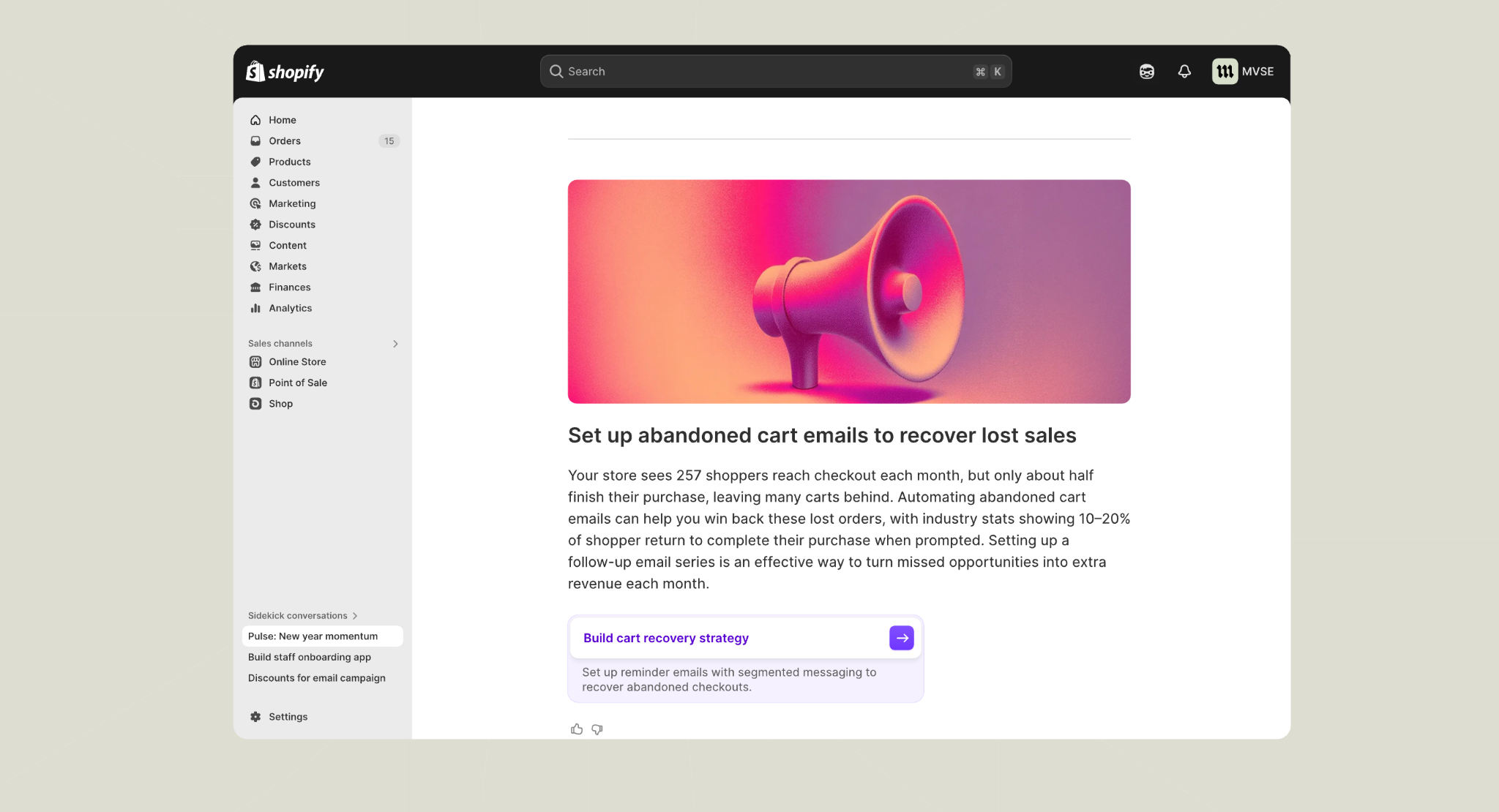
- Proactive Recommendations: The new Sidekick Pulse feature acts like a business advisor that never sleeps. It studies your store data and market trends to offer personalized, high-impact suggestions for improvement, before you even ask . This means merchants get actionable insights (like marketing or inventory tips) in real-time without digging through analytics – a huge win for busy store owners.
- Build Apps by Chatting: Ever wished you could create a custom Shopify app without coding? With Sidekick, now you can. Custom app generation lets you describe what you need in plain language and Sidekick builds the app for your Shopify admin . This lowers the barrier for bespoke functionality – no developer required for simple apps that fit your unique business needs.

- Talk to Your Theme: Editing your store’s design is easier than ever. You can literally tell Sidekick, “make this button rounded” or any design tweak, and it will instantly modify theme settings accordingly . This natural language theme editing turns design changes that used to require digging into code or settings into a quick conversation. Non-technical merchants can finally fine-tune their storefront’s look and feel with confidence.

- Reusable “Skills”: Sidekick now lets you save and share prompt sequences as Sidekick Skills . For example, if you’ve crafted a great prompt to generate a sales report or perform a marketing task, you can save it as a Skill and reuse it anytime (or even share it with other merchants). This collective genius approach means the community of Shopify entrepreneurs can pool knowledge, making everyone more efficient.
- Automate Workflows with Words: Through integration with Shopify Flow, Sidekick turns your instructions into automated workflows. Just describe a task like “automatically tag customers who spend over $200” and Sidekick will create the entire automation flow for you . No coding or clicking through complex menus – just tell Sidekick what you want, and it builds the workflow. This is a game-changer for merchants who want to streamline operations but found automation tools intimidating.
- AI-Powered Image Editing: Sidekick even flexes some creative muscle. It now has built-in pro-level photo editing tools in the Shopify file editor . This means you can ask Sidekick to remove backgrounds, expand image canvas, or add/remix elements in your product photos for a studio-quality look. Merchants without a design team or Photoshop skills can polish their product imagery with ease – solving the “blank canvas” problem of not knowing how to create professional visuals.

In short, Sidekick has matured into a true AI business partner that “thinks ahead” and gives merchants back their most precious resource: time . One merchant tester noted it used to take hours to research things like inventory planning or marketing ideas, but Sidekick now “spits out answers in a minute” . As a Shopify expert, I find this evolution remarkable – it’s like having an e-commerce consultant on call 24/7, integrated right into your admin. For agencies like Fourmeta, these AI capabilities mean we can focus on strategy and creative work while routine tasks or explorations can be delegated to Sidekick.
Selling Through Conversations: Shopify Agentic Storefronts
E-commerce is no longer confined to websites and social media – it’s now entering AI chat platforms. Shopify Agentic Storefronts is a bold new feature that puts your products into AI-driven conversations on popular platforms like ChatGPT, Microsoft Bing Chat (Copilot), and Perplexity . With a one-time setup, your product catalog becomes discoverable to shoppers chatting on these AI assistants, with no custom integration or separate apps needed .
Why is this exciting? Imagine a customer asking ChatGPT for the best running shoes, and your Shopify store’s product appears with the option to buy – that’s now possible. Shoppers can get recommendations and even check out within the chat interface. Agentic Storefronts let customers “buy without leaving their conversation,” and you, the merchant, still control the experience . You decide which platforms can display your products and maintain your branded checkout process, all while capturing attribution data back in Shopify .
From my perspective, this solves a modern problem: consumers are increasingly using AI assistants to discover products, and Shopify is ensuring merchants aren’t left out of that channel. It levels the playing field so that even a small boutique can show up in an AI chat’s shopping suggestions, potentially reaching new customers wherever they converse. Commerce is happening in conversations, and Shopify wants your brand to be part of those chats . This feature is forward-thinking and underscores Shopify’s AI-first approach this Edition.
Launch Bold Ideas Safely: SimGym and Rollouts for Risk-Free Testing
Making big changes to your online store – a new theme, a major promotion, a price change – can be nerve-wracking. Shopify addresses this with two clever tools: SimGym and Rollouts, which together allow merchants to experiment and launch with far less anxiety.
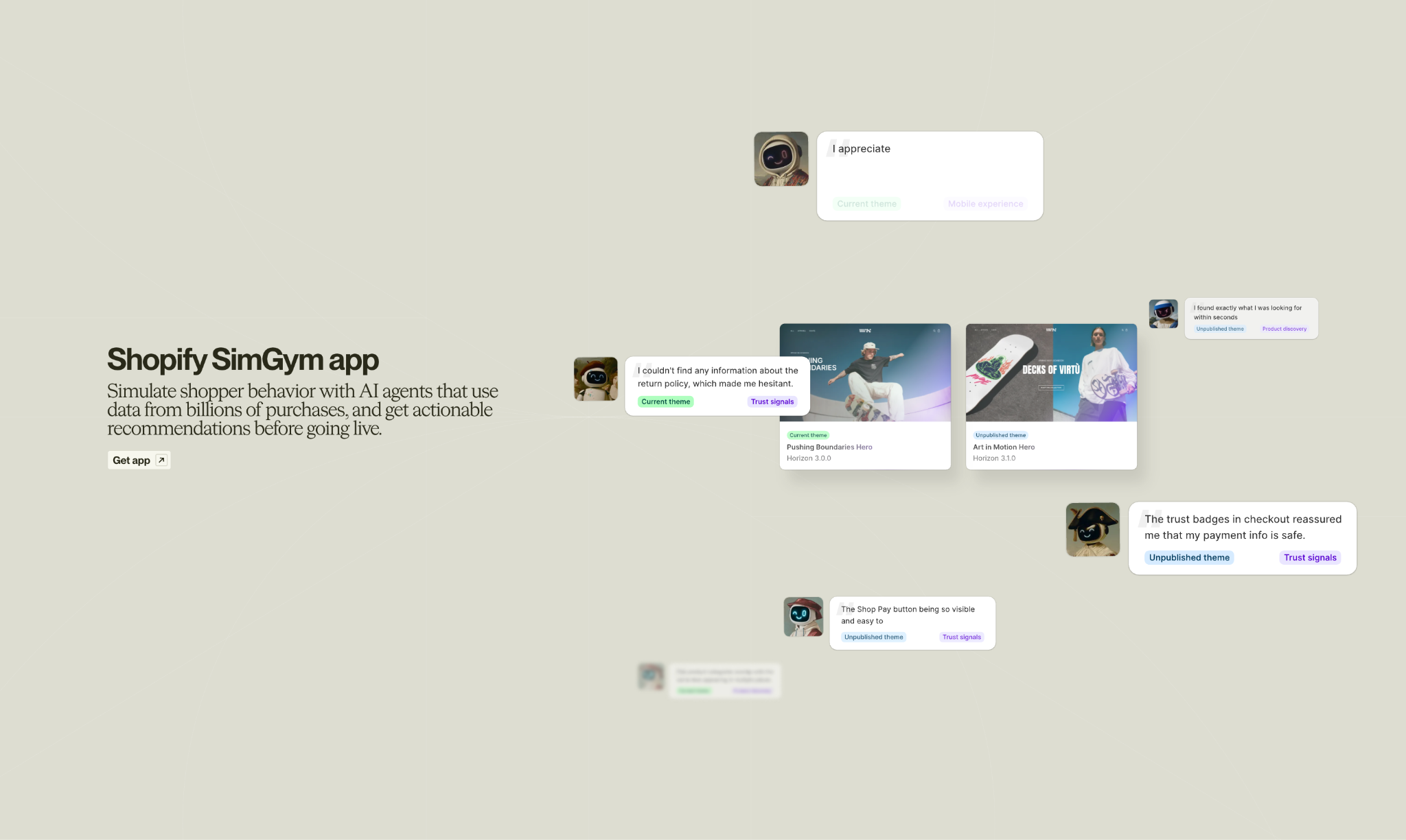
- SimGym is like a flight simulator for your Shopify store . Currently in AI Research Preview, it lets you test drive changes using AI-powered “simulated shoppers” before real customers experience them. Shopify has fed SimGym with patterns from billions of transactions, meaning these AI shoppers behave with realistic shopping habits . You can preview what might happen if you, say, redesign your homepage or change pricing – “try on your business decisions… minus the real-world consequences,” as Shopify puts it . For a small business, this provides insights that were previously only available through risky trial-and-error. For a large merchant, it enables A/B testing big moves without jeopardizing actual sales or site performance. In my 10 years working with merchants, I know how often bold ideas get shelved out of fear; SimGym gives entrepreneurs a crystal ball to see potential outcomes and proceed with confidence.
- Rollouts bring A/B testing and gradual launches inside Shopify’s Admin . Historically, if you wanted to test a new feature or theme, you needed third-party tools or a lot of manual work. Now, with Rollouts, you can schedule changes in advance, run split tests (for example, showing 50% of visitors a new version of your homepage), and roll out updates step-by-step – all natively within Shopify . This turns gut-feel changes into data-driven decisions, because you’ll see which variant performs better before committing fully. No more “flip the switch and hope for the best.” As a professional, I love this because it promotes an experimental mindset; merchants can iterate quickly and safely. It’s like having a built-in safety net and optimization lab, which used to be a luxury for only the biggest players. Now any Shopify store owner can be a growth hacker with controlled experiments.

Together, SimGym and Rollouts eliminate much of the guesswork from store optimization. Shopify is essentially encouraging merchants: Go ahead, try that new idea – we’ve given you the tools to test it safely. This addresses the problem of stagnation born from fear of change. For agencies, these tools mean we can propose innovative changes to clients and back them up with testing data from SimGym and Rollouts, ensuring stakeholders feel secure in our recommendations.
One-Click Catalog Expansion: Shopify Product Network
One of the most intriguing additions in Winter ’26 is the Shopify Product Network, which offers a clever solution to a classic merchant problem: losing sales because you don’t carry a certain product. This feature is “your gateway to instant category expansion,” letting you offer millions of complementary products from across Shopify without holding any inventory yourself . In practice, it works by allowing you to automatically recommend products from other Shopify merchants on key areas of your store (search results, collection pages, post-checkout, etc.) and earn a commission on those sales .
Think about a customer searching your site for a niche item you don’t stock. Normally, that’s a dead end and a lost sale. With Product Network, instead of “Sorry, we don’t have that,” you can present “We’ve got exactly what you need” by surfacing another brand’s product . The customer can buy it seamlessly on your storefront, and you get a cut without ever handling fulfillment. It turns potential bounces into revenue while enhancing customer experience.
From a professional standpoint, this is Shopify’s answer to Amazon’s endless aisle or dropshipping marketplaces – but done in a way that keeps the merchant in control. You choose which categories or products to feature, and you can exclude competitors to maintain brand harmony . It’s currently available for U.S. stores (as Shopify notes), and I expect it will grow globally over time .
For merchants, especially smaller ones, Product Network means you can instantly expand your catalog breadth and satisfy more customer needs without the risks of buying new inventory. It’s also a new stream of income (commission-based) for simply curating relevant items. At Fourmeta, we see this as a boon for clients looking to increase average order value and retention – now they can keep customers engaged by always having something to offer, even if it’s via partner inventory. It’s a smart “network effect” play by Shopify, leveraging the strength of its vast merchant base to help each other.
Also notable in the theme of expanding what you can sell: Shopify Collective (B2B), which allows brands to wholesale to each other, is now available in 35 additional countries . This means more merchants can source products from other Shopify brands directly in their admin and add them to their lineup. Essentially, whether you sell B2C or B2B, Shopify is making it easier to expand your catalog through partner networks, driving new sales opportunities.
Empowering Physical Retail: POS Hub and In-Store Enhancements

Shopify hasn’t forgotten brick-and-mortar merchants in this Winter ’26 Edition. There are significant updates for point-of-sale (POS) systems that solve reliability and capability gaps for in-person selling.
First up, POS Hub – a new hardware base that brings “hardware harmony” to retail . If you’ve managed a Shopify POS, you know that connecting card readers, printers, scanners, etc., often via Bluetooth, can be finicky. The POS Hub changes that by offering reliable wired connections for all your essential checkout hardware . Simply plug your devices into the Hub’s ports, and you have a rock-solid setup with no wireless dropouts. It’s even got its own processing power and built-in monitoring, ensuring data flows smoothly between your devices and the Shopify POS app . In plain terms, this means no more scrambling because the receipt printer lost connection or the card reader failed to pair. As an advisor to retail clients, I know how every lost minute in checkout hurts – the POS Hub is designed to keep the line moving and your staff stress-free.
Beyond connectivity, the POS Hub runs automatic firmware updates and health monitoring , so it self-diagnoses issues before they become problems. This level of reliability is something enterprise retailers expect, and now every Shopify POS user can benefit. If you have a busy physical store, this small piece of hardware can save you from costly downtime at the register. Fourmeta’s retail clients are already eager to get their hands on this because it offers the best of both worlds: the flexibility of tablet-based POS with the stability of traditional wired setups.
In addition to hardware, Shopify rolled out several in-store software improvements:
- Subscriptions In-Store: Merchants can now sell subscriptions through POS using the Shopify Subscriptions app . This is huge for businesses like bookstores, coffee roasters, or any shop that can offer subscription products – you can sign up a customer for a recurring purchase right at checkout. It solves the previous limitation of subscriptions being online-only, blending online/offline seamlessly.
- Quick Inventory Counts: A new feature lets staff scan items with the POS and update inventory on the spot . Stocktakes or spot inventory checks can be done in seconds on the sales floor, ensuring your inventory levels are accurate across channels. This addresses a common retail pain: syncing stock between the backroom and the online store. Now, if something is running low, your staff can fix it in real time without going to a computer.
- Unified POS Customization: Shopify has added a single editor to customize the POS interface – including the smart grid (shortcuts on the POS home), customer display, printed receipts, and even the lock screen . This means you can ensure your brand and workflow are consistent across every aspect of the in-store experience. For example, you could add a holiday greeting on the customer-facing screen or include return policy info on receipts easily. It’s all about polish and efficiency, which high-volume stores will appreciate.
- Same-Day Delivery Integration: For Plus merchants in select countries, Uber Direct integration in POS allows offering fast local delivery with live tracking . If a customer wants their purchase delivered instead of carrying it out, the store staff can arrange that on the spot. It’s a new level of convenience (and another way to compete with online-only players by blending in-person service with e-commerce delivery).
- Expanded Payment Options: Shopify has expanded where its in-person payments and Tap to Pay features are available (e.g., now in more European countries) . They’ve also introduced things like QR code payments in store for alternative payment methods (ideal in regions where QR pay is popular) . These updates ensure global merchants can offer the payment experiences local customers expect, whether it’s contactless card, mobile wallets, or region-specific methods.
In summary, the Winter ’26 retail updates make Shopify POS more robust and feature-rich. Physical retail can be unpredictable, but these improvements – from hardware to software – give merchants greater control and confidence. As someone who’s worked with omnichannel retailers, I see this as Shopify seriously upping its game for in-person selling, making it an even stronger unified commerce platform. Our agency’s take: the lines between online and offline commerce continue to blur, and Shopify is proactively building tools for merchants to succeed everywhere.
Online Store Enhancements: More Power and Personalization
Shopify didn’t stop at flashy AI features; they also delivered many practical improvements to the core online store experience. These updates may not grab headlines, but they directly tackle everyday merchant needs and wishlist items:
- Sell on WordPress: In a surprising and welcome move, Shopify now offers an official WordPress plugin that lets you turn any WordPress site into a Shopify-powered store . This means you can embed products, a cart, and checkout on your WordPress blog or site seamlessly. Problem solved: merchants who love WordPress’s content management (or have an existing WP site) no longer need a separate Shopify storefront – they can have the best of both worlds. As a professional, I see this as Shopify extending an olive branch to the broader web ecosystem, making commerce more accessible on any platform.
- More Product Variants: The infamous variant limit has been blown away. You can now create products with up to 2048 variants (yes, over two thousand!). For context, Shopify’s limit used to be 100 variants per product. This change is monumental for merchants with complex catalogs – think custom T-shirt sellers (size, color, fit, material combinations) or B2B sellers with many configurations. It removes a constraint that often forced workarounds or even platform changes. Now, Shopify can handle highly varied product lines with ease, simplifying catalog management for many businesses.
- Hidden (Unlisted) Products: A new Unlisted product status lets you hide products from your online store’s navigation, search, and collections while still making them accessible via direct link . This is perfect for exclusive drops, B2B-only products, or special campaign items. Previously, merchants used hacks or separate storefronts for this – now it’s a built-in option. It solves the problem of how to quietly have products that only certain customers should find.
- Improved Collections & Merchandising: Shopify added the ability to duplicate collections and to exclude certain products from automated (smart) collections using conditions . This gives merchants finer control in merchandising. For example, you can exclude “Sale” items from a “New Arrivals” collection automatically. Small tweaks like this come from merchant feedback and make managing collections far less tedious.
- Automatic Discounts for Specific Customers: You can now set automatic discounts that apply only to particular customer segments (like VIP customers or newsletter subscribers) . This was a long-standing request – it enables personalized promotions without requiring discount codes. Merchants can reward loyal customers with special pricing that activates just for them at checkout. This fosters loyalty and solves the manual work of distributing codes or creating separate campaigns.
- Unit Pricing & Global Compliance: Unit pricing (showing price per unit measure, e.g. per ounce or per item) is now available globally . Compliance with regulations and transparency for customers get easier, especially for merchants selling in Europe or other regions where unit pricing is mandated or simply good practice. It’s a sign that Shopify is thinking globally and helping merchants meet local requirements out-of-the-box.
- AI-Powered Domain Suggestions: When you’re setting up a new store (or adding a domain), Shopify can now use AI to suggest unique, available domain names for your business . This is a handy little feature for newcomers or anyone rebranding – brainstorming a good store name that’s not taken just got simpler.
- Theme and Store Creation Improvements: Shopify continues to streamline getting a beautiful store up quickly. Horizon, Shopify’s new default theme family from the last edition, received 250+ improvements for speed, animations, and sections . Plus, they’ve improved theme search and filtering in the Theme Store to help find the perfect look . Impressively, there’s an AI-generated theme feature for new merchants: describe what you plan to sell, and Shopify will generate a starter store theme for you – even before you sign up . This lowers the friction for aspiring entrepreneurs to visualize their store idea in seconds, a very cool onboarding innovation.
From a seasoned Shopify expert viewpoint, these enhancements show Shopify’s commitment to polish and merchant feedback. None of these changes are flashy on their own, but together they significantly improve merchant quality-of-life. They eliminate many small headaches (variant limits, hacky plugins, manual merchandising tasks) and open up new possibilities (blending content and commerce on WordPress, personalized promos, etc.). For our team at Fourmeta, these “minor” features are major wins for implementation – they allow us to build solutions for clients more elegantly and with fewer apps or custom code. It means faster setups, easier maintenance, and happier store owners.
Marketing and Customer Engagement Upgrades
Driving traffic and engaging customers is the lifeblood of any e-commerce business, and Shopify Winter ’26 brings new tools to boost marketing efforts, often leveraging Shopify’s network and data:
- Shopify Product Network & Shop Campaigns: We discussed how Product Network lets you feature other brands’ products on your store (and vice versa). In tandem, Shop Campaigns – Shopify’s native ad network – now extends to online stores . This means your products can automatically get promoted on other Shopify stores’ pages (like collection or post-purchase pages) if you opt in, and you only pay when those placements convert to sales . It’s like getting shelf space in complementary stores as advertising. For merchants, especially in the U.S. where this is rolling out, it’s an easy way to acquire new customers without managing complex ad targeting; Shopify does the matchmaking using its vast data. It also reinforces the idea that being on Shopify is more than just using software – it’s joining a commerce community where stores can uplift each other.
- Built-in SMS Marketing: Shopify Messaging (the app that already handles email and SMS communications) now supports full SMS marketing campaigns right from Shopify . You can create, schedule, send, and track promotional text messages to customers without needing a third-party SMS service. Given the high open rates of SMS, this is a powerful channel, and making it native simplifies life for merchants. It addresses the problem of juggling multiple marketing tools – now email and SMS live together in Shopify’s ecosystem, complete with scheduling calendars and templates .
- Auto-Translated Forms: If you collect leads or run surveys with Shopify Forms, the app will now auto-translate your forms into 19 languages . This helps merchants engage customers in their preferred language automatically, which is crucial for international stores. It’s one more example of Shopify baking in globalization features (no more manually duplicating forms for each language).
- Smarter Segmentation and Personalization: The customer segmentation tools in Shopify got a usability boost. There’s a refreshed template library for segments and better search/filter to find just the right segment definition . Plus, you can now segment by new criteria like product categories viewed or purchased , which enables more nuanced targeting (e.g., make a segment of customers who bought running shoes and market new athletic gear to them). When creating emails or texts, Shopify Messaging can even suggest segments and automatically include best-sellers or personalized product sections in the content . Essentially, Shopify is infusing more intelligence into marketing: helping merchants send the right message to the right people at the right time – all within a single platform.
- Shop App Enhancements: Shopify’s consumer-facing Shop app is a growing channel for merchants, and this edition supercharges it. Now, merchants can add shoppable videos to their Shop app storefront, and Shopify’s AI will optimize how those videos get shown to users . There’s a new Deals Feed in the app where your discounts and offers can appear prominently , and a feature called Dynamic Storefronts that personalizes the product ordering for each shopper in the app . In short, if you’re selling through the Shop app, it’s becoming a more interactive and personalized experience – closer to a social commerce feel. This helps merchants engage mobile shoppers who prefer app experiences and discoverability through visuals and AI-driven recommendations.
All these marketing updates share a theme: using Shopify’s data and network effects to the merchant’s advantage. As a marketer, I’m impressed by how much heavy lifting Shopify is starting to do. Small merchants often struggle with segmentation, multi-channel marketing, or ad spending inefficiencies. Shopify is baking in solutions – from networked ads to AI content suggestions – that make sophisticated marketing tactics accessible to everyone. My professional take is that this could significantly improve ROI on marketing for merchants who leverage these features, and it reduces reliance on external ad platforms by tapping into Shopify’s internal network (which is a clever strategic move by Shopify too).
Checkout, Payments, and Finance: Smoother and Faster Transactions
Shopify’s checkout is already industry-leading for conversion, but Winter ’26 brings even more personalization and payment flexibility, plus financial tools to help merchants manage and grow their money.
- Personalized Shop Pay Button: Shoppers using Shop Pay will now see a more personalized checkout button, showing the last four digits of their saved credit card . This small touch reassures customers which payment they’ll use (useful for those with multiple cards) and streamlines the process. It’s a minor UX improvement that can reduce friction and confusion at the final step of purchase – and every fraction of a percent more conversions counts.

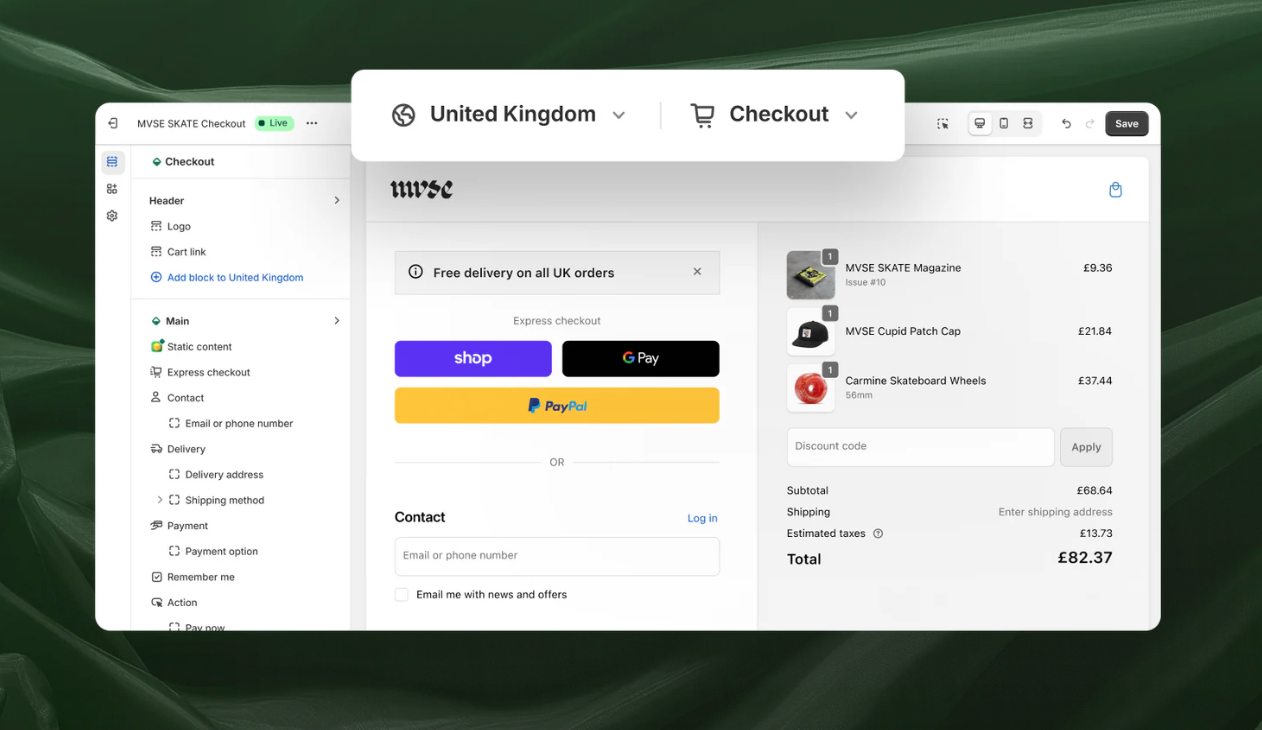
- Localized Checkout & Accounts: For global merchants and B2B sellers, you can now tailor the checkout and customer account pages per market or customer group . For example, you might have different messaging, branding, or fields for EU customers vs. US customers, or a wholesale client login that shows different info than retail customers. This level of customization was previously only achievable with complex coding or separate stores; now it’s built into Shopify’s editor. It solves the challenge of providing a localized experience under one store umbrella, which is crucial for conversion and compliance across different regions.
- More Payment Options: Shopify expanded Shop Pay Installments (Buy Now Pay Later) to the UK , giving UK merchants and shoppers the benefit of installment payments up to 24 months. They also integrated Global-e with Shop Pay for international orders , which means a smoother experience for cross-border customers using local payment methods and currencies. Additionally, Apple Pay is now available through Shop Pay as well , adding yet another convenient option for Apple users. On Shopify Payments (Shopify’s own payment gateway), more local payment methods were added in France and across Europe , and Klarna (a popular BNPL) is now offered in several new countries through Shopify Payments . The theme here is giving customers their preferred way to pay no matter where they are. As an agency, we often emphasize how offering the right payment methods can lift checkout conversion – Shopify just made that a lot easier by covering more geographies and preferences out-of-the-box.
- Seamless Payment Processor Switch: One notable operational tweak – if you’re using a third-party gateway and want to move to Shopify Payments, you can now do so with zero downtime . Previously, switching payment providers could cause a brief disruption or manual work; now it’s a smooth transition. This indicates Shopify’s confidence in getting more merchants onto their payment platform and removing any barrier to doing so.
On the financial management side, Shopify introduced tools under the Finance category that help merchants access capital and manage funds:
- Continuous Funding (Capital Flex Accounts): Shopify Capital – Shopify’s merchant funding program – launched a Flex Account where you apply once and can receive ongoing access to funding as you repay, without repeated applications . This is great for growing businesses needing working capital; it turns financing into a more agile, on-demand resource. Merchants only incur fees on the outstanding balance, and funds can replenish up to a limit as they’re paid back, somewhat like a revolving credit line . In my experience, cash flow is a big hurdle for scaling, so this continuous funding model can help merchants seize opportunities (like bulk inventory buys or marketing pushes) when they need, with less friction.
- Automated Finance Management: Shopify Balance (the merchant bank account feature) now lets you set up automatic transfers/rules – for example, every payout that comes in could automatically allocate 10% to a savings account, 30% to a tax account, etc. . It’s like having an automated budgeting system, ensuring you set aside money for expenses or profit. This kind of fintech addition helps entrepreneurs manage money smarter without external tools. Likewise, issuing staff spending cards is now possible with spend controls , meaning a store owner can give employees prepaid cards for business purchases with limits – super useful for organizing expenses in a growing team.
- Faster and Global Capital: Shopify Capital expanded into more European countries (Netherlands, Spain, Ireland) , and features like same-day ACH transfers for Shopify Balance accounts in the US mean merchants can move money faster when needed . There are even crypto-related perks: Shopify will give automatic credits on any sales made via USDC (a stablecoin) as a reward – an interesting nudge to encourage crypto adoption, though currently limited regions.
- Better Fraud and Dispute Handling: Lastly, Shopify is helping merchants protect their coin – real-time fraud alerts via SMS for Shopify cardholders (to catch suspicious activity quickly) , and a unified interface to manage chargeback disputes across Shopify Balance and Shopify Credit accounts . These improvements mean less time dealing with the painful side of payments (fraud, disputes) and more peace of mind that Shopify has your back.
Overall, Shopify is smoothing out the entire funnel: from a customer’s first click on “Buy” to the merchant receiving the funds and reinvesting them. As someone who’s advised businesses on optimizing checkout, I’m pleased to see features that reduce friction and enhance trust at checkout (personalized buttons, local experiences) because those directly improve sales. And as someone who also knows the struggles of financial admin for small businesses, the integrated money management features are a brilliant value-add. Shopify is not just where you sell, but increasingly where you manage the money you earn – that’s powerful.
Operational Efficiency and Insights
Running an e-commerce store involves a lot of behind-the-scenes operations – inventory, order management, analytics, workflows. Winter ’26 brought a trove of enhancements here too, aimed at making daily life easier for merchants and their teams:
- Flexible Inventory Transfers: Inventory management gets more realistic with the ability to receive stock from “unspecified” sources and edit in-transit shipments . This means if you’re moving products between locations or getting stock from a vendor, you have more flexibility to adjust and record those transfers accurately on the fly. It prevents the system from tying your hands with too-rigid flows, so your inventory records reflect real-world nuances (like a shipment partially delivered, etc.).
- Mobile Quick Sale: Shopify’s mobile app now supports a Quick Sale feature where you can sell an item in-person immediately and take payment via Tap to Pay or payment link . This is handy for on-the-spot sales (think pop-up markets or anytime you’re away from the POS). Essentially, your phone becomes a lightweight cash register for instant transactions.
- Better Store Monitoring (Even on Your Wrist!): For the data-obsessed, Shopify updated its Apple Watch app with improved metrics and widgets . Monitoring daily sales, live traffic, etc., is now glanceable on your watch. It’s a small touch, but entrepreneurs love to keep an eye on the numbers, and now they can do it literally hands-free.
- Smarter Analytics: Shopify Analytics got several upgrades that analysts and growth teams will cheer for: Heatmaps that show metrics by hour/day to spot peak times , customizable top-N lists (not limited to 5 items) , and bot traffic filtering to clean up your conversion rates . Also, inventory history logs no longer cap at 180 days , so you can see a full year or more of stock changes – vital for auditing and understanding seasonality. You can filter orders by new criteria like custom metafields or weight , which aids in niche workflows (e.g., find all heavy orders for freight planning). And if you run multiple stores (Shopify Plus organizations), there’s now a consolidated analytics view across stores – a huge convenience for businesses with multi-region shops who used to have to merge reports manually.
- Smoother Order Edits and Fulfillment: Shopify now auto-recalculates duties and taxes when editing an unfulfilled order that has international components . This reduces errors when changes happen post-purchase. They’ve also added a precaution when doing big inventory updates: a color-coded summary and confirmation step to prevent accidents (we’ve all heard horror stories of someone accidentally zeroing out inventory – now Shopify gives a heads-up). Fulfillment workflows improved too: you can mark orders as “in progress” and add notes in a redesigned fulfillment UI , which helps teams coordinate on partially fulfilled or complex orders. There’s also the ability to issue a refund by discounting items already fulfilled (to adjust for a post-purchase price match or goodwill credit) with proper tax handling . These are nitty-gritty details, but they matter immensely for efficient operations and customer service.
- Enhanced Workflow Automation: In the Shopify Flow app (the automation toolkit), you can now preview workflow results before turning them on , which is akin to testing your automations with sample data – very useful to ensure you don’t create unintended consequences. The Flow editor UI got an overhaul for easier building of complex automations , and you can even cancel running workflows if something’s going wrong . Combined with Sidekick’s ability to help create these flows, automation in Shopify is becoming more powerful and user-friendly.
From an operations perspective, these updates aren’t flashy, but they’re the kind of improvements that make merchants’ everyday work more efficient and less error-prone. They also reduce the need for extra apps or exports for analysis, since Shopify’s native capabilities are richer now. As someone who’s optimized many Shopify stores’ operations, I appreciate these refinements – they show that Shopify is listening to merchant feedback for more flexibility and insight. The less time a merchant spends wrestling with inventory spreadsheets or clunky analytics, the more time they can spend on strategy and growth – and that’s exactly what these changes facilitate.
B2B and Wholesale: Going Global and Getting Easier
If your business includes wholesale or B2B components, Shopify Winter ’26 has good news for you too. Shopify is continuing to strengthen its B2B offerings (which are relatively newer to the platform) and making it easier to run wholesale operations:
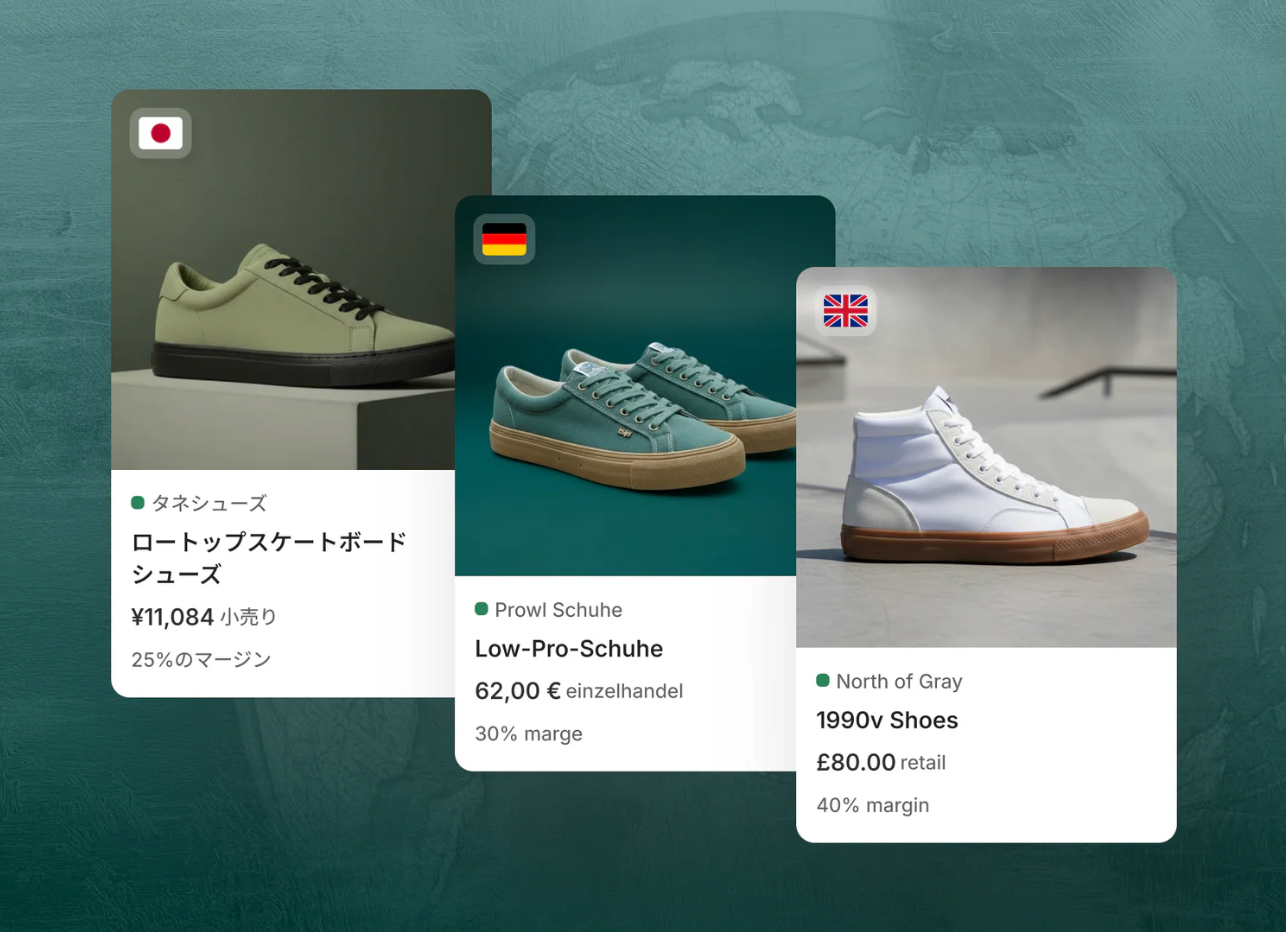
- Shopify Collective Goes Global: Shopify Collective – which allows brands to connect and sell each other’s products wholesale via the admin – is now available globally in 35+ countries . Previously, Collective was more limited. Now a retailer in the UK could source products from a supplier in the US, for instance. This greatly expands the network of potential partnerships. In essence, Shopify is creating a worldwide wholesale marketplace among its merchants. For a retailer, it’s easier than ever to find new products to stock without trade shows or complex deals – just a few clicks in Shopify to connect. For a brand, it’s a new distribution channel to be carried by other stores. This global expansion could be transformative for those embracing B2B on Shopify.
- ACH Payments for B2B: In the US, Shopify B2B (Plus) now supports ACH bank payments at checkout . Many B2B transactions prefer bank transfers over credit cards (for large orders or fee savings). Now a B2B buyer can pay directly from their bank, and merchants can even charge saved bank accounts later from the admin. It’s a more flexible, business-friendly payment option that aligns with how wholesale orders often work (net terms, etc.). This should streamline A/R for merchants – no more chasing checks or manual bank wires.
- B2B Retailer Directory: Shopify Collective now includes a Retailer Directory so suppliers (wholesalers) can discover and connect with new retail partners . It’s basically a built-in networking tool – if you’re a brand looking to expand wholesale, you can find stores that might be a good fit and vice versa. This kind of matchmaking used to happen at expos or via reps; Shopify is trying to digitize it. As an agency, we see this potentially lowering the barrier for small brands to start wholesaling without an expensive sales team – Shopify is facilitating the introduction.
- Smarter B2B Operations: A bunch of small but important B2B improvements launched: the ability to send separate payment requests per fulfillment on split shipments (so you can invoice as you ship, great for partial orders), support for store credit for B2B customers (e.g., issuing credit to a company account) , and letting B2B buyers use in-store pickup as a delivery option if they want to collect goods. Plus, for Shopify Plus, there are new Shopify Functions capabilities to set dynamic payment terms, require deposits, or flag certain orders for review automatically . These mimic advanced ERP features, but now available in Shopify through customizations – meaning big wholesalers can enforce their business rules (like 50% deposit on large orders, or “orders over $10k require review”) programmatically.
- Apps and Integrations: Shopify highlighted that 11 new apps were made B2B-compatible, offering things like quote requests, custom buyer roles, and shopping lists . They also rolled out pre-built integrations with popular ERPs like NetSuite and Acumatica via partners . This signals that Shopify’s B2B ecosystem is maturing – it’s not just features, but also third-party support and connectors to back-office systems that are crucial for larger B2B operations.
The upshot is that Shopify is serious about being a one-stop platform for both DTC and wholesale channels. The Winter ’26 Edition makes running a B2B storefront on Shopify more viable globally and for larger, complex operations. As someone who’s seen businesses juggle separate systems for retail and wholesale, I find this consolidation promising. It means less duplicate work and a more unified view of your business. For our clients at Fourmeta who do B2B, these improvements can simplify processes and expand their reach. For example, a client could quickly add a wholesale component to their Shopify store and tap into the Collective network for new partnerships – something that might have taken months of business development can now happen within Shopify’s interface. It’s all about breaking down barriers between businesses and enabling growth through collaboration, which is quite an “abundance” mindset from Shopify.
Developer and Ecosystem Innovations
While merchants see the shiny features, Shopify hasn’t forgotten the developers and partners who build on the platform. Winter ’26 introduces a “new way to build for commerce” – heavily leveraging AI and improving the dev experience, which ultimately benefits merchants with better apps and custom solutions:
- Agentic Commerce for Devs: To support the Agentic Storefronts feature, Shopify released new APIs (Catalog API and a Checkout Kit) that allow developers to build commerce into AI agents and any application . For example, a developer could create a plugin for a chat app that uses these APIs to fetch Shopify products and handle checkout in a chat interface. The Checkout Kit can pop out a Shopify checkout anywhere (web, mobile app) in a secure way . This is quite forward-looking – it means the developer community can extend Shopify’s reach into all sorts of “conversational commerce” experiences beyond the core platforms. In plain language, Shopify is giving the tools to embed shopping into the apps of tomorrow, not just the web stores of today.
- Sidekick for Developers: Interestingly, Sidekick can now assist with app discovery and integration. It will recommend apps to merchants and even help install them , with a preference for “Built for Shopify” apps (those that meet strict quality guidelines). Plus, developers can build Sidekick app extensions so that merchants can query their app’s data or trigger its actions through Sidekick’s chat interface . This is a big deal: it means merchants might ask, “Hey Sidekick, what were my best-selling products last month?” – and Sidekick might use an analytics app’s data to answer. For app developers, this is a new frontier to integrate deeply with Shopify’s AI. For merchants, it means a more unified, conversational way to use third-party app capabilities. It solves the problem of having to learn each app’s UI – you could just “ask” for what you need. As an advocate for merchants, I find this exciting because it could drastically simplify using advanced app features.
- App Store and Theme Store Improvements: Shopify is giving a boost to high-quality apps and themes. The App Store now features Built for Shopify certified apps more prominently and even gives a 60-day grace period for apps to fix issues before losing that badge . This encourages better app quality and reliability. Meanwhile, the Theme Store has smarter filters and embedded theme demos, plus all of Shopify’s new Horizon themes fully support B2B features out-of-the-box . That means choosing a theme is easier and you’re less likely to need custom tweaks for B2B, etc. All of this results in a better ecosystem where merchants can trust the tools they add to their store and find them more easily.
- AI-Powered Dev Tools (Dev MCP): Shopify’s development environment (they call parts of it “Dev MCP” for Monorail Control Panel perhaps) now has AI assistance. It will validate API calls in real-time, catch errors as you code, and even generate code suggestions . Essentially, Shopify built an AI pair-programmer into the dev console. They are serious about boosting developer productivity – which means faster app development and fewer bugs in the apps merchants use. They also launched Tangle, an open-source visual platform for building machine learning and data pipelines collaboratively . This is more for the data science folks, but it could lead to innovative new ways to analyze commerce data or personalize experiences using ML, built right on Shopify.
- Shopify Functions & Checkout Extensibility: Shopify Functions (the new way to customize backend logic) are taking over fully by June 2026, replacing the old Script Editor . Winter ’26 added new functions capabilities like discount code rejection logic and dynamic order terms for B2B . They’re ensuring that anything you could do with custom scripts (and more) is doable with Functions, which are faster and more secure. Plus, a ton of enhancements for POS and online store extensions were released – from a Shop Minis SDK for immersive shopping experiences in the Shop app , to improvements in POS UI extensions, and even a new code editor for themes with modern features like autocomplete and version diffing . The developer in me is happy because these improvements mean building custom solutions on Shopify is less of a headache. The entrepreneur in me is happy because better developer tools translate to better features and integrations for merchants down the line.
In summary, Shopify Winter ’26 isn’t only about what Shopify built, but also about empowering the community (developers, partners, agencies like ours) to build with Shopify more effectively. It’s laying the groundwork for the next generation of commerce experiences – many of which will involve AI and custom integrations. From a Fourmeta perspective, these dev-centric updates mean we can innovate faster and integrate deeper when creating bespoke solutions for clients. We’ll be able to utilize AI in development to reduce costs and errors, leverage new APIs to sell in chat apps or AR/VR, and trust that the app ecosystem will be safer and more advanced. It’s Shopify giving us better brushes to paint the e-commerce masterpiece, to use a renaissance metaphor.
Final Thoughts: A Renaissance Moment for Merchants
Having delved into Shopify’s Winter ’26 Edition, I can confidently say this is one of the most impactful updates I’ve seen in my 10 years working with Shopify. The term “Renaissance” is more than marketing flair – it truly feels like a rebirth of what’s possible in commerce. Shopify is blending powerful AI tools with merchant-centric design, allowing creativity and efficiency to flourish together.
What do we love most? The way AI is woven throughout the platform – not as a gimmick, but as a genuine amplifier of merchants’ abilities (from Sidekick’s superpowers to AI-driven marketing and testing tools). Shopify has tackled many long-standing merchant problems: struggling with code or design? Sidekick’s got you. Afraid to change your site? SimGym and Rollouts have your back. Losing sales on products you don’t carry? Product Network fills the gap. Running out of time? Automation and smarter UIs save minutes at every turn. It’s a holistic upgrade to the merchant experience.
Crucially, Shopify did all this without forgetting the basics. The Edition also delivers those “quality of life” improvements (variants, plugins, performance, checkout options, inventory tricks) that make day-to-day operations smoother. It shows that Shopify is listening to feedback while also leading with innovation.
From my professional vantage point at Fourmeta Agency, this Edition opens up exciting possibilities. We can help our clients harness these features immediately – whether it’s integrating Sidekick into their workflows, expanding their product offerings via networks, or improving their retail setups. Our team is particularly excited to experiment with the new AI capabilities to create even more personalized and high-converting shopping experiences. Ultimately, these tools don’t replace the merchant’s vision; they amplify it . Shopify has given entrepreneurs a more powerful chisel, to borrow their Michelangelo analogy, and I’m eager to see the masterpieces our clients will carve out.
If you’re a merchant, my advice is to dive in and explore these new features. As with any renaissance, those who embrace the new ideas early often gain an edge. Winter ’26 Edition isn’t just an update, it’s an invitation to reimagine what your commerce business can do – faster development, smarter marketing, global reach, and creative freedom, all on a single platform. And if you need a guiding hand to implement any of this, that’s what we’re here for (with Sidekick as our trusty aide, of course!).
In the spirit of being the first to review and implement these innovations, let’s toast to a new era of e-commerce – one where technology truly amplifies human creativity and hustle. Welcome to the Shopify Renaissance.