
Fourmeta in 2025: the year we stopped “trying AI” and started shipping with it

If I had to describe 2025 at Fourmeta in one sentence, it’d be this:
We didn’t just “keep up” with what the market was doing — we built systems (and shipped work) that matched where eCommerce, content, and customer experience are actually heading.
And honestly… that shift wasn’t cute. It was messy, fast, occasionally chaotic, and very real. The kind of year where you blink and suddenly it’s August, you’re deep in AI + content ethics discussions, and someone on the team says, “Cool — can we also help three brands migrate platforms without breaking SEO before Q4?” 🫠
Our biggest mic-drop of 2025: Luly Yang takes Silver for Best New Website Launch
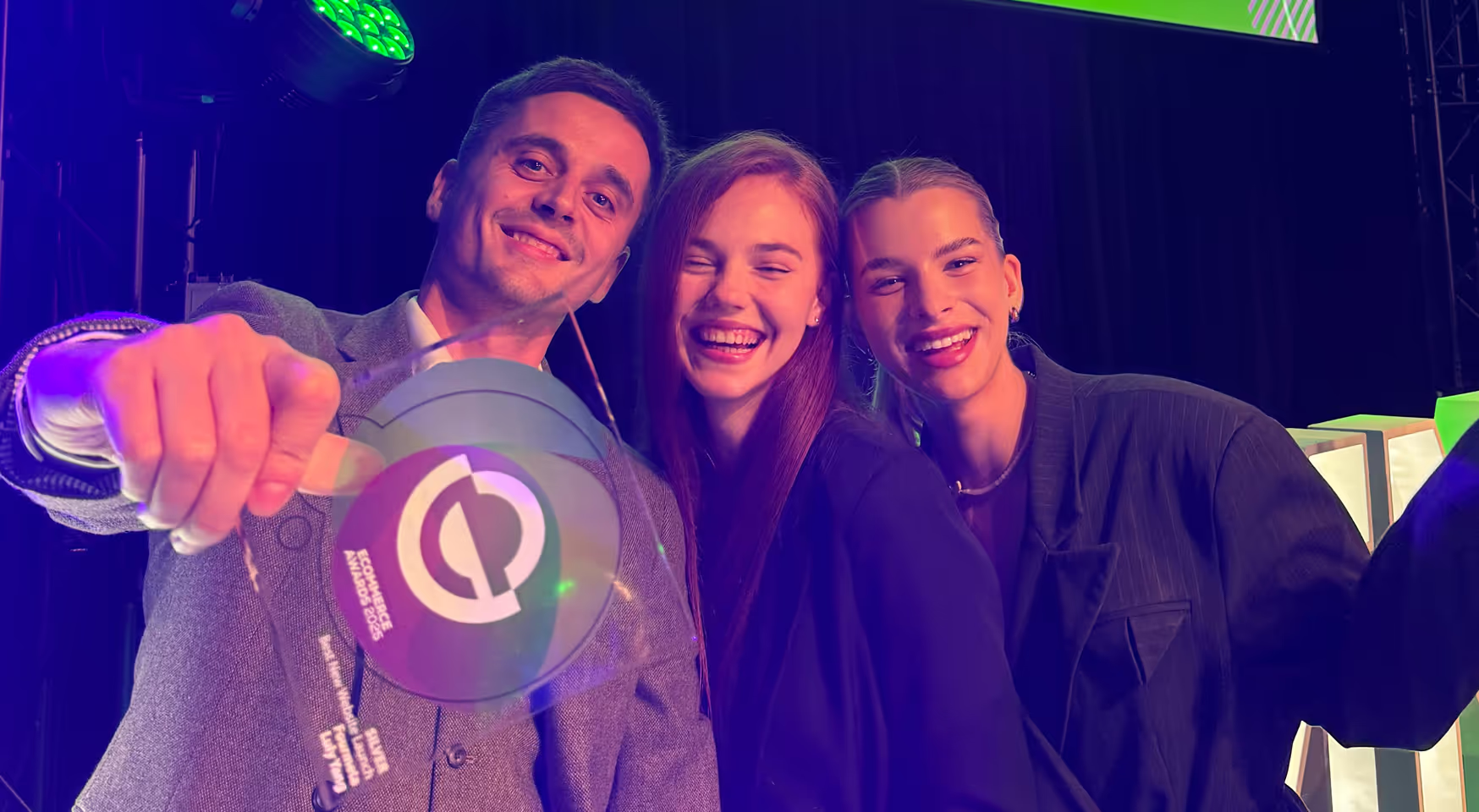
If I had to pick the moment that summed up our year, it’s this: the Luly Yang website launch being awarded Silver in “Best New Website Launch” at the eCommerce Awards 2025. Not because it’s shiny (okay… it is shiny), but because that project was pure Fourmeta DNA: turning a gorgeous-but-chaotic experience into a structured, conversion-ready, premium Shopify journey — without diluting the brand’s personality. We rebuilt the UX from the ground up, organised the collections in a way that actually makes sense to shop, and made sure every page felt like a story and a sales engine at the same time. Getting recognised publicly for that work wasn’t just “nice” — it was the industry basically saying: yes, obsessing over clarity, speed, and user flow is still the move.
The theme of the year: performance-first creativity (with AI actually doing the heavy lifting)

At the start of 2025, you could already feel it: brands were tired.
Tired of “content for the sake of content.”
Tired of paying for photoshoots that were outdated by the time the campaign went live.
Tired of websites that looked premium but converted like a sleepy museum gift shop.
And internally, our answer became sharper and sharper throughout the year:
If it doesn’t perform, it doesn’t ship.
You can see that direction in what we published and pushed: eCommerce built for what’s next (strategy + design + development + AI together, not in silos), and real work with brands across fashion, beauty, and beyond.
Q1: beauty, Shopify reality-checks, and the “growth costs money” conversations
January kicked off with a very practical focus: if you’re building (or rebuilding) a beauty store, you need to know what “good” actually looks like — and how much it really costs.
That’s why our early-year content leaned into fundamentals: what features matter, what trends will actually shape buying behaviour, and what teams should prioritise before they spend money in the wrong places.
Then February came in with the big one: beauty eCommerce trends for 2025 — from AI-driven personalisation to sustainability expectations becoming non-negotiable. It wasn’t “future talk.” It was “this is what customers are already trained to expect.”
And behind the scenes, this was also the quarter where we kept seeing the same pattern in client calls:
“We want Shopify.”
“We also want it custom.”
“And we want it fast.”
“Also… can it magically improve conversion without changing anything else?”
So yeah — Q1 was the quarter of setting expectations like adults. 🙂
Q2: migrations, partner selection, and the “AI tools that actually move the needle” post
By March, we were deep in migration territory: Wix → Shopify, WordPress → Shopify, and the classic “please don’t let us lose SEO rankings” panic.
We published guides and “common mistakes” content for a reason: migrations aren’t scary because they’re complex — they’re scary because people rush them and pretend details don’t matter. (Spoiler: details matter.)
Then May was personally one of my favourite moments of the year — because I got to say what most marketers were thinking:
Enough with the AI hype. Which tools actually help? And how do you use them without turning your brand into a robot?
That’s exactly why I wrote “The Best AI Tools for eCommerce (and How to Actually Use Them in 2025)” — to map AI into real workflows across content, CX, ops, and analytics, while calling out the very real problem of “fragmented tool stacks.”
And June was about decision-making: how brands choose digital partners without getting burned, and what questions they should be asking before signing anything. Because the real cost isn’t hiring the “wrong agency.” It’s rebuilding after the wrong build.
Q3: fashion went full-content-war… and we leaned into the uncomfortable AI questions

If Q2 was about systems, Q3 was about culture.
Because by August, the fashion conversation changed: it wasn’t “how do we run better ads?” — it was:
How do we own our content pipeline so we’re not dependent on anyone’s timeline but our own?
That’s what Alex wrote about in “Fashion Marketing in 2025: Why Owning Your Content Pipeline is the New Owning the Customer.” And honestly, that framing became one of the clearest strategic narratives we repeated in calls: content isn’t just marketing — it’s distribution power.
At the same time, we didn’t ignore the awkward stuff. We published about rights, trust, and “brand safety” — because once AI content becomes scalable, the question stops being “can we generate this?” and becomes “should we?”
And then there was the topic that secretly makes everyone nervous: UGC.
In 2025, UGC didn’t die. It got… complicated.
Because when AI can generate “authentic-looking” creators, testimonials, even virtual influencers, brands have to decide what authenticity means now. That’s the heart of “The UGC Mirage: How AI Rewrites Authenticity in Paid Social.”
September continued that thread with practical examples — real fashion brands using AI (not theory, not vibes) and what marketers can learn from them.
The offering we leaned into harder: AI FOURMULA (and the end of “wait for the photoshoot”)

Somewhere between all the strategy talk and content ethics debates, there was a very simple operational truth:
Fashion and beauty brands don’t need more ideas. They need more shippable assets — faster.
That’s where AI FOURMULA became a clearer and clearer lane for us: taking the reality of modern production cycles and turning it into a system where ideas don’t sit in sketchbooks — they become launch-ready content you can scale.
It’s not “AI for fun.” It’s AI for speed, iteration, testing, and conversion.
Meanwhile on Fourmeta.com: we doubled down on startup speed + investor-ready clarity
While Fourmeta UK content focused heavily on Shopify, fashion, beauty, and eCommerce growth, Fourmeta.com leaned into a different (but very connected) audience: founders.
And the theme there was brutally consistent:
Your website is not decoration. It’s a sales and trust machine.
Alex published the Webflow launch playbook in October — essentially a founder-first approach to shipping a credible site in weeks, not months.
Then the investor-trust angle followed: “Your Website Is Your Pitch Deck” — the idea that investors judge you in seconds, and your site needs clarity, proof, and a painfully obvious next step.
And if you’ve ever seen a founder spend six months polishing a “brand story” while their homepage still says “We’re redefining the future of synergy”… yeah. That’s why the “website mistakes that scare off investors” piece exists.
Different audience, same DNA: make it clear, make it fast, make it convert.
The “we’re actually building this” moment: chatbots and the Mixam showcase
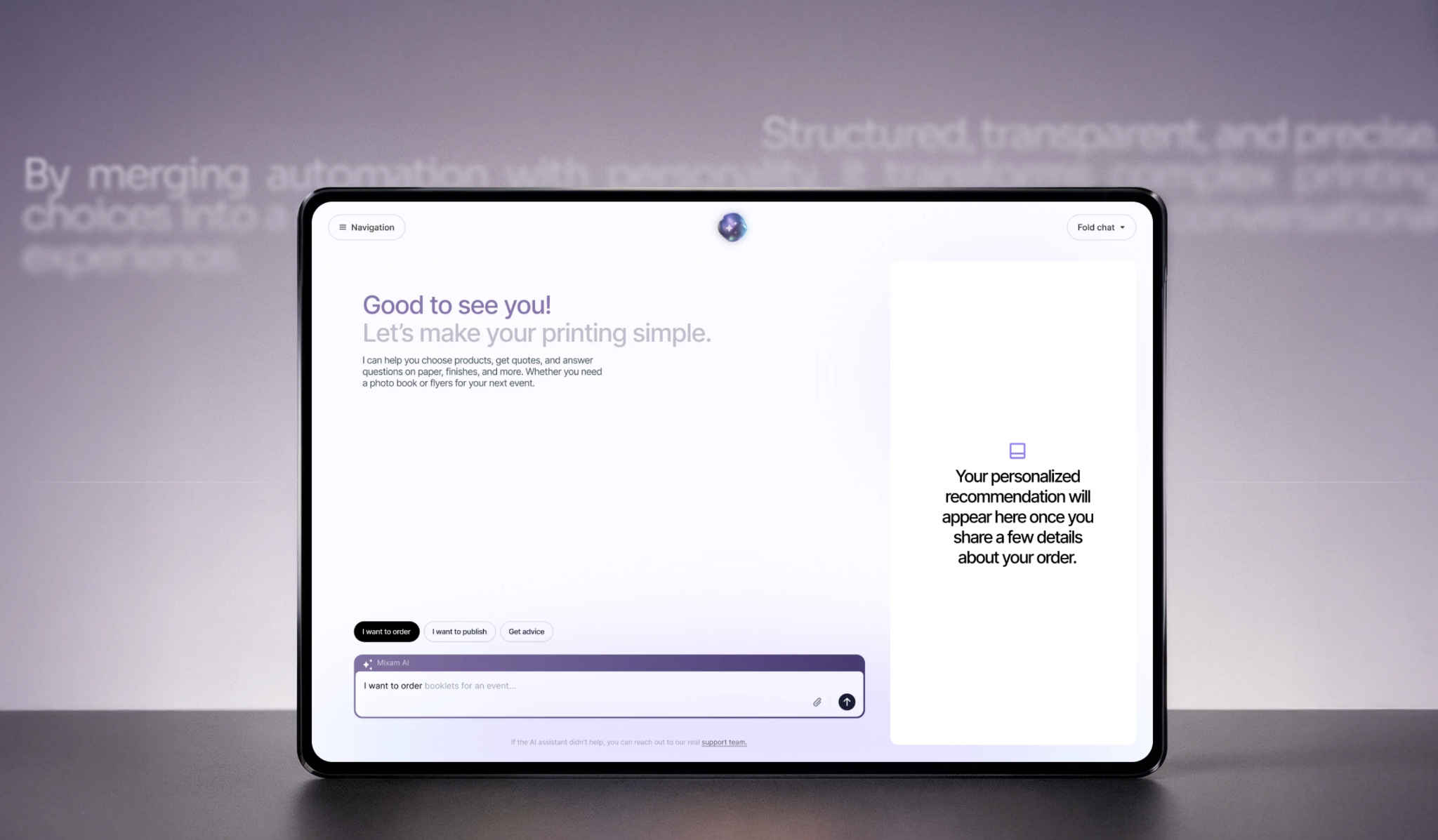
One of the biggest practical shifts we publicly showcased this year was our move from “AI strategy talk” into AI experiences shipped for real brands.
A highlight: Mixam — where we worked on an AI-powered chatbot experience to guide users through complex printing choices, alongside visual/UI work and a web concept. We shared it as one of the first showcases of our chatbot development service, with the full case on Behance.
This mattered because it signalled something: AI at Fourmeta isn’t a slide in a deck. It’s a product mindset.
(And yes, it also meant we had to get very serious about UX for AI: flows, edge cases, “what happens when the user says something unhinged,” and how to keep it helpful without sounding like a corporate FAQ bot.)
Shopify signal, UX thinking, and keeping us grounded
One small but telling example: him sharing and amplifying our Shopify Winter Editions 2025 review — not just “new features,” but what those features mean for merchants and agencies.
And for anyone who’s ever worked inside an agency: that kind of internal signal matters. It shapes what we recommend, what we build, and what we experiment with next.
Q4: Black Friday went AI-mainstream, and migrations got… very enterprise
If Q3 was “content wars,” Q4 was “performance wars.”
We published Black Friday content because 2025 Black Friday felt different — and we said the quiet part out loud: AI-powered shopping didn’t stay niche.
In our Black Friday 2025 review, we highlighted how AI assistants and chatbots became a mainstream way people searched for deals — including an Adobe-cited jump in traffic from AI tools to retail sites.
And naturally, as Q4 pressure hit, the migration conversation escalated:
- “last-minute CRO fixes you can ship in 48 hours”
- Magento → Shopify Plus for enterprises who are done with friction
- Shopify Winter ’26 Edition review
- and a full “do you need Shopify migration specialists?” piece in December
This is also where our work feels the most Fourmeta: part strategy, part execution, part calm guidance when everyone else is panicking.
What I’m taking into 2026
Three things, honestly:
- AI is no longer a feature — it’s an operating system.
Not for everything. Not blindly. But if you’re not integrating it into workflows (content, CX, research, iteration), you’re basically choosing to move slower. - Brands that win will build engines, not campaigns.
Content pipelines. Testing loops. CRO habits. Systems that compound. - The internet is allergic to fluff now.
Whether you’re an eCommerce brand or a startup raising money: clarity wins. Proof wins. Speed wins.
Let’s not do 2026 alone
If you’ve been reading our posts this year, thank you. Seriously.
If you’ve commented, shared, challenged us, or DM’d with “hey, can you look at this?” — you’ve been part of our momentum.
And if you’re building something in 2026 — a Shopify store, a migration plan, an AI content system, a chatbot experience, a Webflow site that actually converts — come say hi.
Let’s make it real. Let’s make it perform. And let’s build stuff that’s worth people’s attention (because attention is expensive now).
See you in 2026,
Maria
(P.S. If you want to talk through your 2026 roadmap, you can reach out via Fourmeta — we’ll tell you what’s worth doing, what’s not, and what will actually move the needle.)