
Shopify development company in the UK: how to choose the right partner for your eCommerce brand

You've got the brand. You've got products. Maybe you've even got a Shopify store that's doing okay, but "okay" isn't scaling. You know you need serious development help, but when you start Googling "Shopify development company UK," you get flooded with agencies all promising the same thing.
So how do you actually cut through the noise?
This guide is written for founders, ecommerce directors, and marketing leads at DTC brands who are serious about growth and don't want to waste time or budget on the wrong partner. Let's get into it.
Why the right Shopify development partner changes everything
There's a meaningful difference between a Shopify website development company that builds you a nice-looking store and one that understands conversion, performance, custom integrations, and how to grow with you. The wrong agency costs you twice, once when you pay them, and again when you bring in someone else to fix it.
The UK market is particularly saturated with Shopify agencies. Some are freelancers with an agency name, some are web studios that learned Shopify last year, and some are genuinely world-class Shopify ecommerce development companies with proven track records on high-growth brands.
Knowing which is which takes more than reading their website.
Start with the brief, not the shortlist
Before you even talk to a single agency, get crystal clear on what you actually need.
Ask yourself:
- Are you doing a full rebuild, a migration (from Magento, WooCommerce, etc.), or theme customisation?
- Do you need custom app development or complex integrations (ERP, PIM, 3PL, subscriptions)?
- Are you on standard Shopify or Shopify Plus, or are you planning to upgrade?
- What's the timeline and budget range?
- Who internally will manage the relationship?
Being vague in briefing gets you vague proposals. The more specific you are, the faster you'll see which agencies actually get your world.

Shopify vs Shopify Plus: know the difference before you hire
Shopify vs Shopify Plus: this is where a lot of brands make costly mistakes. If you're doing £1M+ in revenue or scaling fast, you're probably either on Shopify Plus already or you will be soon. Shopify Plus unlocks things standard Shopify simply can't do: checkout extensibility, custom B2B flows, Launchpad for campaigns, Flow automations, and multi-store setups.
Not every Shopify development company is equipped to work at this level. You want a partner who has lived and breathed Shopify Plus, built checkout UI extensions, worked with the Plus APIs, handled complex merchant setups.
When shortlisting, always ask: "What percentage of your Shopify projects are Plus?" If the answer is low, keep moving.
What to actually look for in a Shopify eCommerce development company
Track record on brands like yours
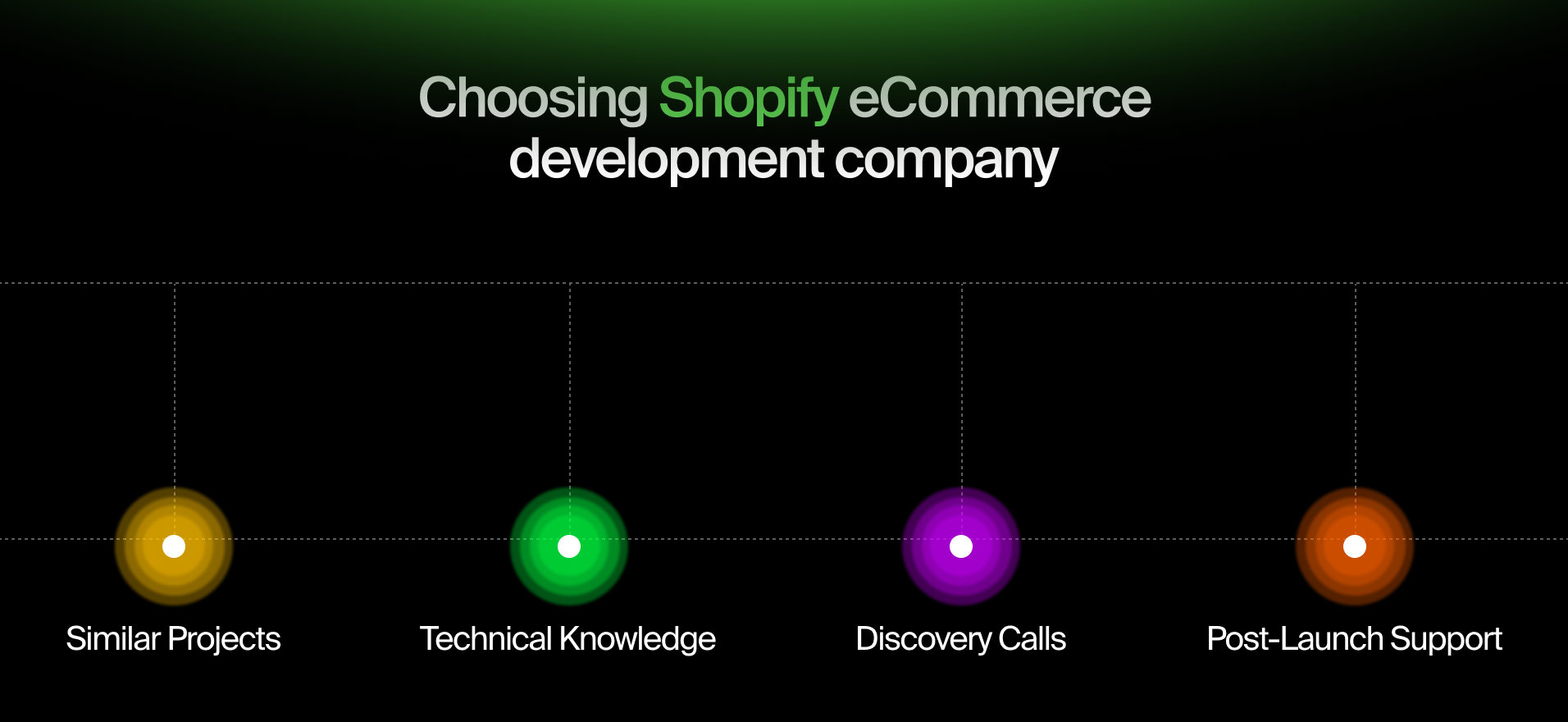
Portfolio matters, but context matters more. An agency that's worked exclusively on B2B wholesale is a different animal from one that specialises in DTC fashion or beauty. Ask for case studies in your sector, and look at specific outcomes. Revenue lifts, page speed improvements, conversion rate gains. Real numbers.
Technical depth
A lot of Shopify website development companies are design-led. That's great for aesthetics, but if you need a custom subscription model, a headless build, or a bespoke integration with your warehouse system, you need engineers who know what they're doing. Ask who specifically will be coding your project and what their background is.
Honest discovery process
Good agencies ask difficult questions before writing a proposal. If someone sends you a quote within 24 hours of a 30-minute intro call, be cautious. The best Shopify development partners push back, challenge assumptions, and help you understand the scope properly before committing.
Post-launch support model
Build and bolt is a trap. Make sure the agency offers retainer or ongoing support, has a clear process for bug fixes and updates, and won't leave you stranded after go-live. Ask how they handle critical issues, what's the SLA on a broken checkout at 11pm before a big campaign?
Red flags to watch out for
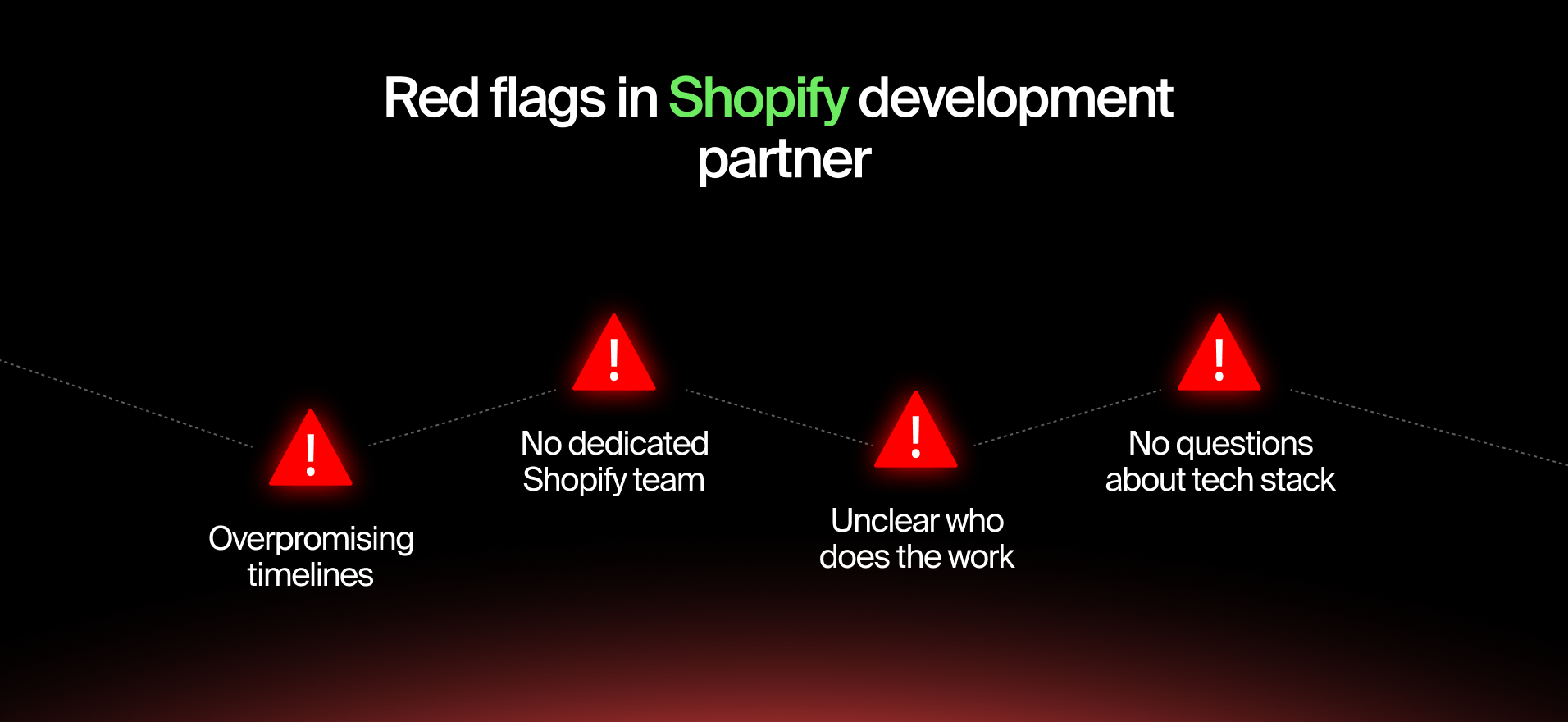
- Overpromising timelines. A full custom Shopify Plus build in 3 weeks is not realistic. If it sounds too fast, cut corners are guaranteed.
- No dedicated Shopify team. Some digital agencies "do Shopify" among ten other platforms. You want specialists.
- Vague about who does the work. Many agencies quote senior people, then hand work to juniors or offshore subcontractors without telling you.
- No questions about your tech stack. If they're not asking about your ESP, ERP, analytics setup, or existing apps, they're not thinking about integration, and that will bite you later.
- Long contracts with no exit clauses. Reputable Shopify ecommerce development companies are confident enough in their work to offer flexibility.
How to structure the selection process
Here's a practical hiring framework:
Step 1 Longlist (5–8 agencies). Use referrals from your network, Shopify's official Partner Directory, and agency-specific review platforms like Clutch. Filter by UK-based, Shopify Plus certified where relevant.
Step 2 RFP or detailed brief. Send the same brief to everyone. Compare how they respond: thoroughness, questions asked, tone, timeline to respond.
Step 3 Shortlist calls (3 agencies). One hour each. Focus on: who specifically will work on your account, how they handle problems mid-project, and what they'd do differently if they were you.
Step 4 Reference check. Ask for two or three client contacts you can actually call. Not just written testimonials. A 10-minute phone call with a former client tells you everything.
Step 5 Proposal review. Look at scope clarity, assumptions documented, payment terms, and what's explicitly out of scope. The detail in a proposal reflects the detail in the work.
Fourmeta Shopify development company
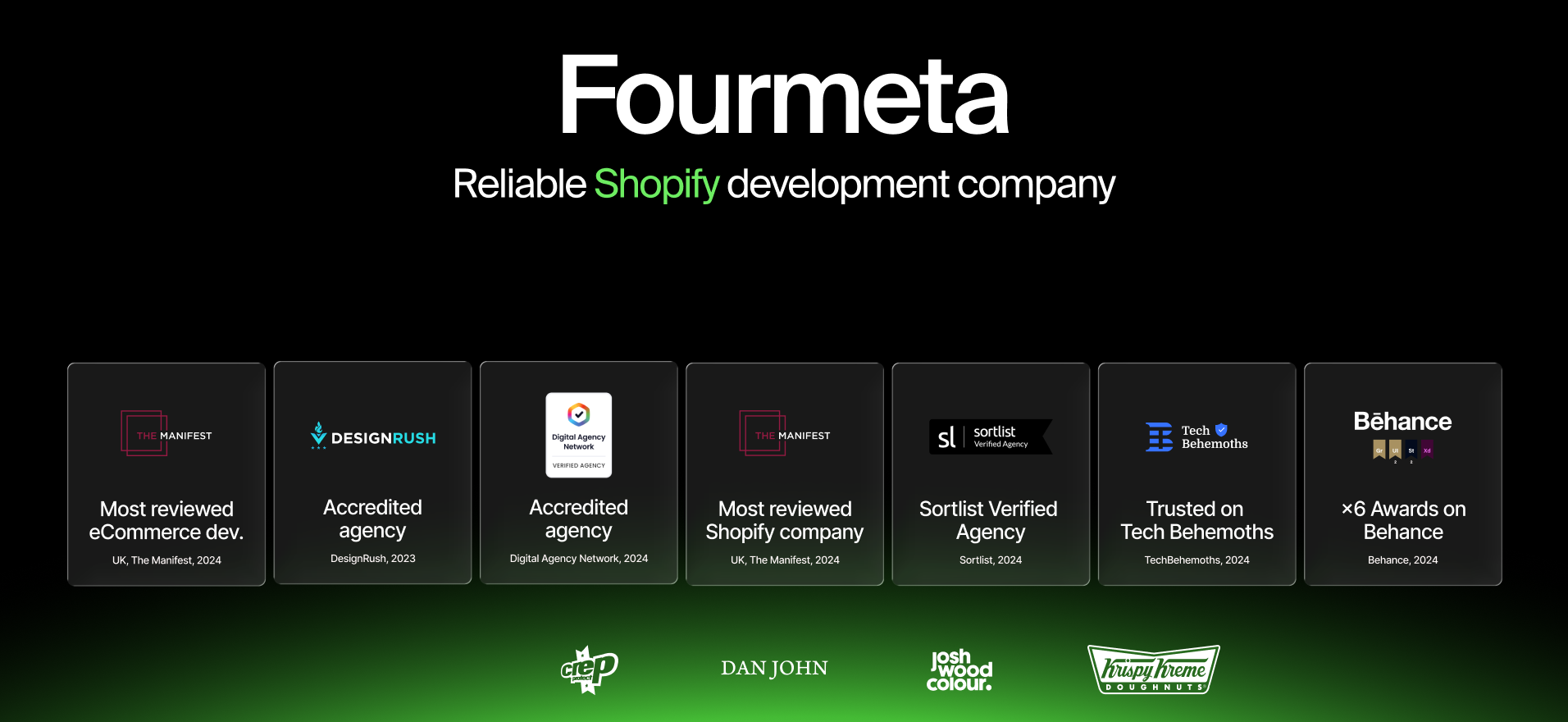
One Shopify development company that consistently comes up in UK ecommerce circles is Fourmeta. We work exclusively within the Shopify ecosystem, which matters, we're not trying to be everything to everyone. Our team specialises in Shopify and Shopify Plus builds, custom development, and CRO-focused design for DTC brands, with experience across fashion, lifestyle, and consumer goods.
What sets us apart is our approach: we take time to understand your brand, your operations, and your growth ambitions before writing a single line of code. For founders and ecommerce directors who've been burned by agencies that disappeared after launch, that kind of partnership model is worth a lot.
If you're in the market for a Shopify ecommerce development company that knows the UK DTC landscape, Fourmeta is a solid shortlist addition.
Case study: Dan John
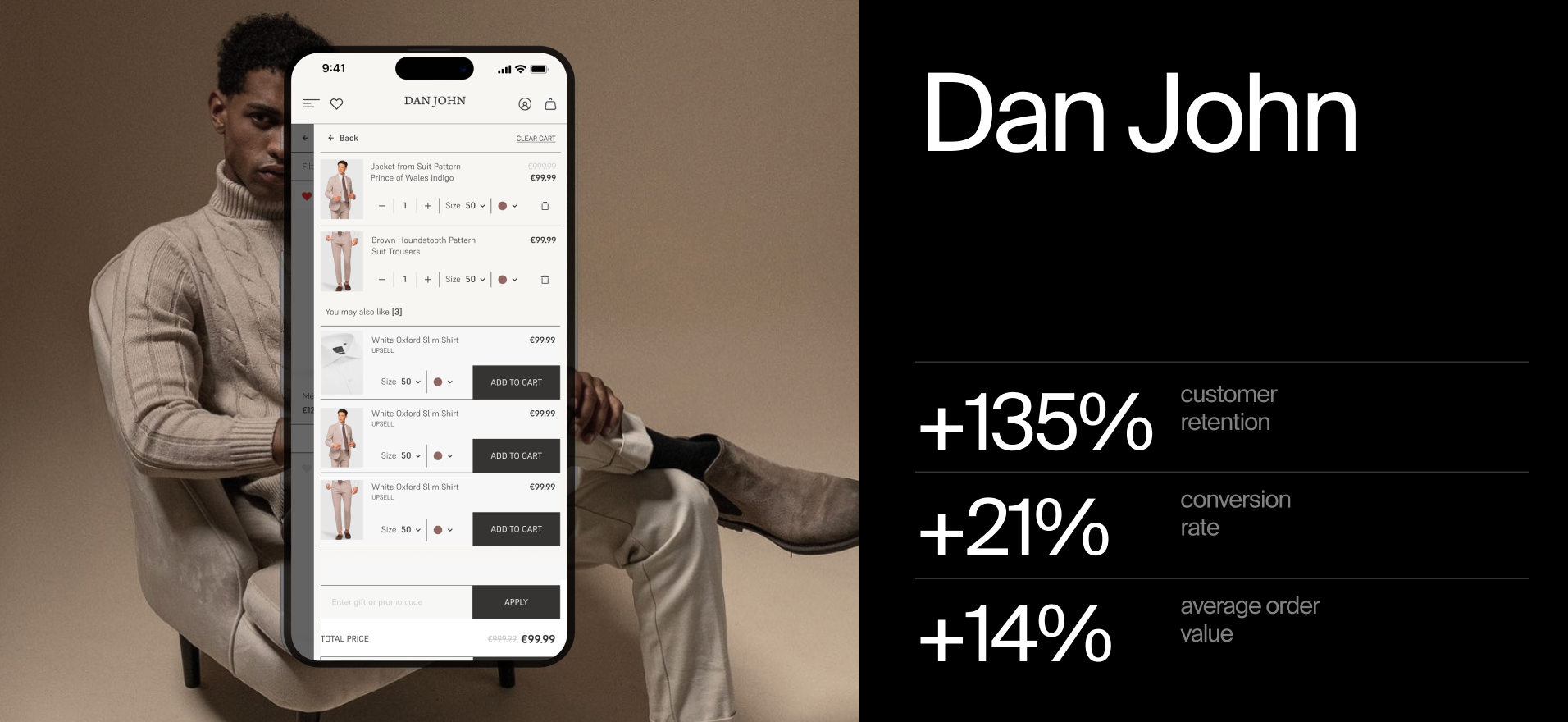
If you want to understand what Fourmeta actually delivers, the Dan John project says it better than any capability deck.
Dan John is a heritage Italian menswear brand founded in Rome in 1855. They came to Fourmeta with a clear problem: their ecommerce presence didn't come close to matching the quality of their product or the prestige of their in-store experience. They needed a site that honoured 170 years of tradition while performing like a modern, conversion-obsessed DTC store.
Fourmeta built a full headless Shopify Plus store, separating the front-end from the backend to unlock faster load times, smoother navigation, and true omnichannel capability across all devices. We integrated a headless CMS for multi-language content management, added a LoyaltyLion integration directly into the customer profile, and created something genuinely differentiating: an Online Look Builder, a virtual dressing room where customers can mix and match pieces, experiment with outfits, and shop the look directly. It's the kind of feature that bridges the gap between in-store experience and online convenience, and it directly drives longer session times and higher basket values.
The results:
- +135% customer retention
- +21% conversion rate
- +14% average order value
The project won Best New Website Launch at a major industry awards with judges specifically calling out the slick checkout experience, strong performance metrics, and seamless mobile and desktop execution.
That's the benchmark for what a great Shopify ecommerce development company should deliver: not just a good-looking site, but measurable commercial outcomes and a build that scales.
Questions worth asking in every Shopify agency conversation
Before you sign with anyone, get answers to these:
- How many Shopify Plus projects have you delivered in the last 12 months?
- Who is the lead developer on my project, and can I meet them before we start?
- How do you handle scope creep?
- What does your QA process look like before launch?
- Can you walk me through a project that didn't go to plan and how you handled it?
- What's your process for performance optimisation post-launch?
The answers and how they're given, will tell you more than any case study.
Summary
Choosing the right Shopify development company in the UK isn't about finding the cheapest or the most well-known. It's about finding a team that understands ecommerce at a strategic level, not just at a code level. One that asks the right questions, is honest about what's possible, and is invested in your brand's success beyond the launch date.
Do the groundwork. Brief specifically. Reference-check obsessively. And look for a partner, not just a vendor.
Your Shopify store should be your biggest revenue channel. It deserves a development partner who treats it that way.
Looking for a Shopify development company in the UK with deep Shopify & Shopify Plus expertise? Fourmeta works with growth-focused DTC brands to build and scale high-performing Shopify stores.